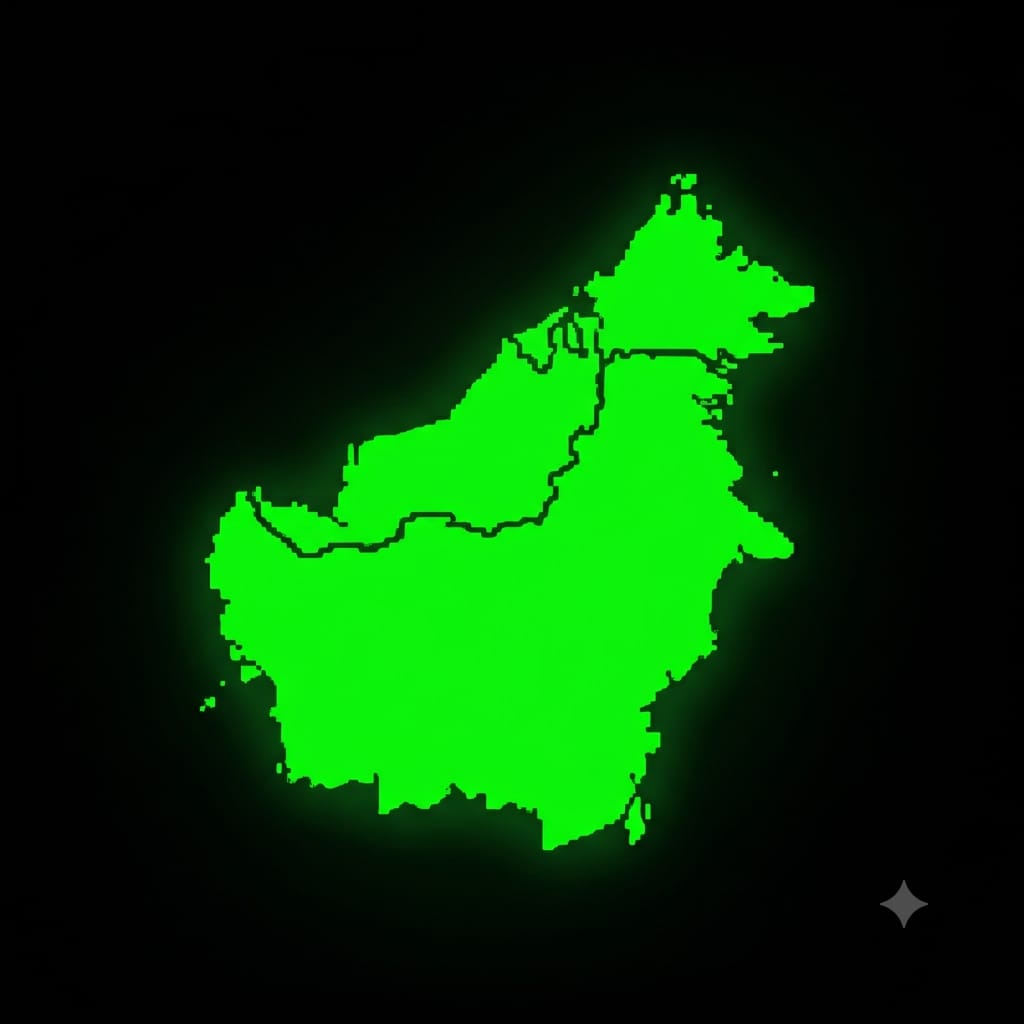
Regions
Sabah · Sarawak · Brunei · Kalimantan
Borneo is split between three countries, and where you go decides what you're likely to see. Sabah is the easiest introduction — orangutans, Bornean elephants and proboscis monkeys all within a week's travel. Sarawak trades that for limestone caves, Rafflesia and longhouse culture upriver. Brunei protects some of the last untouched primary rainforest on the island. Kalimantan is by far the largest share and holds most of the wild orangutan population, but takes longer to reach. Choose a region below for the reserves, rivers and national parks in it, and the species you're most likely to see at each.
Why Sabah
Sabah packs an unusual range of habitat into a small area — lowland dipterocarp rainforest at Danum Valley, the river floodplain of the Kinabatangan, montane cloud forest above 3,000m on Mount Kinabalu, and a chain of protected reserves connecting them. Distances are short and the roads are good, which is why a single week here can turn up orangutans, Bornean elephants, proboscis monkeys, clouded leopards and hornbills within a few days of each other.
Why Sarawak
Malaysia's largest state trades Sabah's mountains for limestone karst and cave systems — Gunung Mulu alone holds one of the largest cave chambers on Earth and a nightly exodus of millions of bats. The rainforests hold their own records too: Lambir Hills has logged more tree species per hectare than almost anywhere else studied, and Gunung Gading protects Rafflesia, the world's largest flower. Add proboscis monkeys on the coast at Bako and Iban longhouse culture upriver at Batang Ai, and it's a very different kind of Borneo trip to Sabah's.
Why Brunei
Oil wealth meant Brunei never had to log its rainforest for revenue, and the result is one of the highest proportions of untouched primary forest left anywhere on the island. Ulu Temburong National Park is the centrepiece — reachable only by longboat, with a canopy walkway suspended above forest that's barely been touched. It's a small footprint next to Sabah or Sarawak, but what's there is about as pristine as Borneo gets.
Why Kalimantan
The Indonesian side of the island is by far its largest — roughly three-quarters of Borneo's landmass — and holds the majority of the wild orangutan population as a result. Tanjung Puting is the best-known access point, with klotok riverboats gliding past feeding platforms built up by decades of research at Camp Leakey. Further north, Kutai and the seasonally flooded lake system at Danau Sentarum cover terrain few visitors ever reach, from Mahakam River swamp forest to blackwater floodplains that transform completely between wet and dry season.