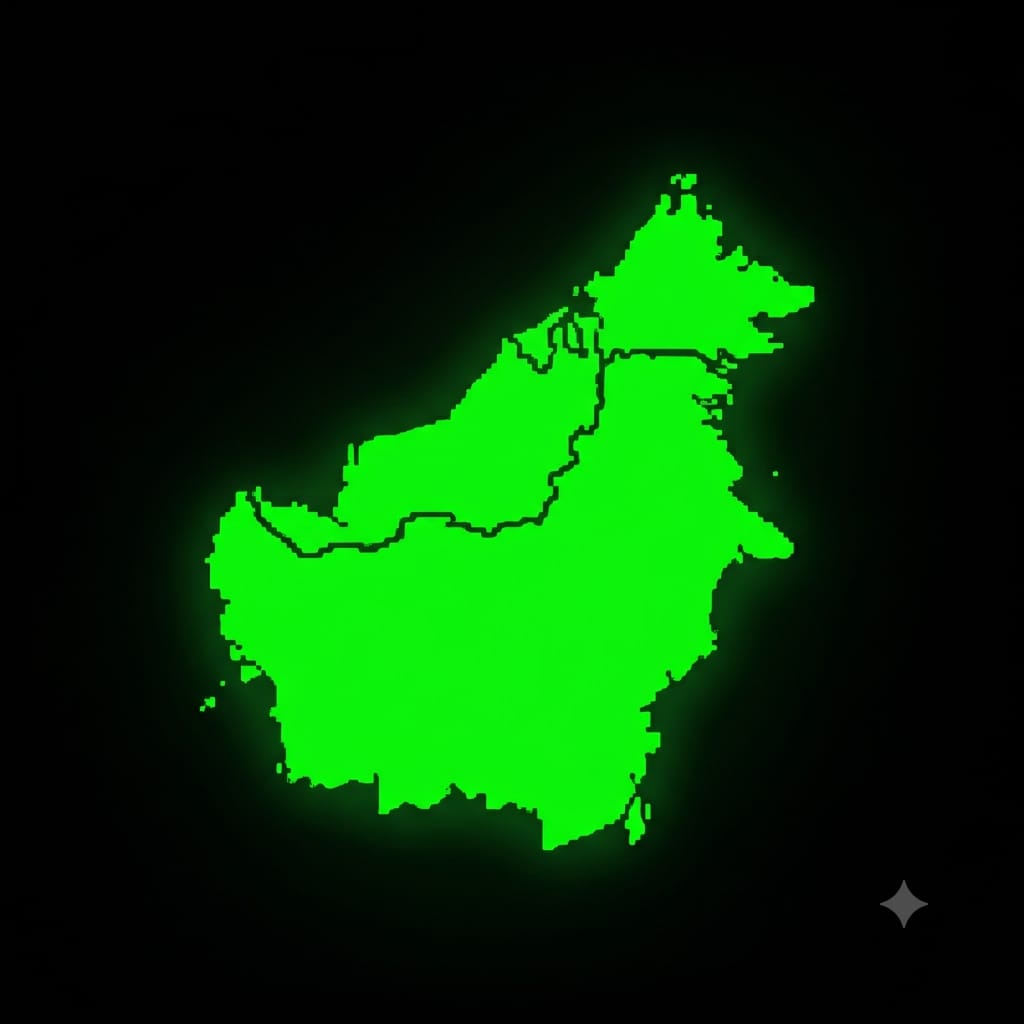
A free field guide to the snakes of Borneo — 166 species, each with photographs, scientific names, Malay and Indonesian names, and notes on habitat and where they turn up. Nothing to buy and nothing to sign up for.
What Borneo's snake list looks like
The bulk of the list is colubrids — 56 species of largely harmless or rear-fanged snakes, including the bronzeback tree snakes and the gliding Chrysopelea. Above them sit the animals people actually worry about: king cobra, a handful of kraits and coral snakes, and the pit vipers. The pit viper list is short but includes two Bornean endemics, the Sabah pit-viper and the keeled pit-viper, which are among the most photographed snakes on the island.
There are also 22 sea snakes on the list, which surprises people. They belong to the coastal and offshore waters rather than the forest, and most visitors who meet one do so while diving.
Finding and identifying them
Almost all snake encounters in Borneo happen at night, on a trail edge, a stream bank or a lodge boardwalk. Night walks at Danum Valley, the Kinabatangan and around Bako in Sarawak produce the most, and a slow torch on the vegetation either side of the path finds more than walking fast does.
Identification here is a real problem for visitors, because several of the harmless species look like the dangerous ones and the local names are used loosely. Each species page has photographs and the features that separate the look-alikes. Treat every snake as if you cannot identify it until you have — the guide is for knowing what you saw, not for deciding how close to get.
One thing worth ruling out first: if it has no scales, no visible eye and a body ringed with close-set grooves like an earthworm's, it is not a snake at all but a caecilian — a harmless burrowing amphibian that gets killed on sight more often than any actual snake does.
Using this instead of a book
Printed herp guides for Borneo are good but expensive, and several are now out of date on the taxonomy after recent splits. This is free, current, and photographic rather than illustrated. The full comparison is on the field guide page. See also lizards and turtles and crocodiles.
All 166 species
Each card has two colour-coded toggles:
turns lime green — adds it to your trip planner
turns blue — marks it as seen in my sightings