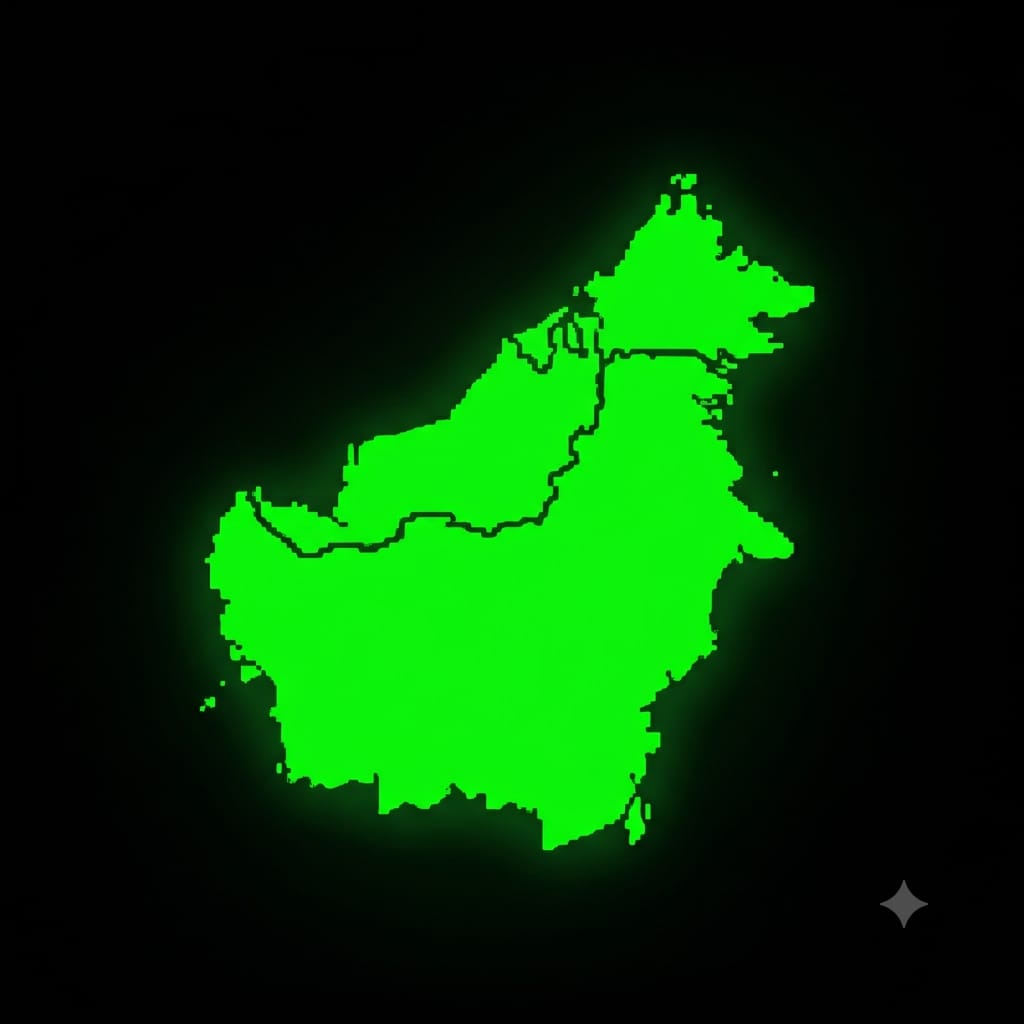
 Wildlife
of Borneo
The Rare Mammals of Borneo
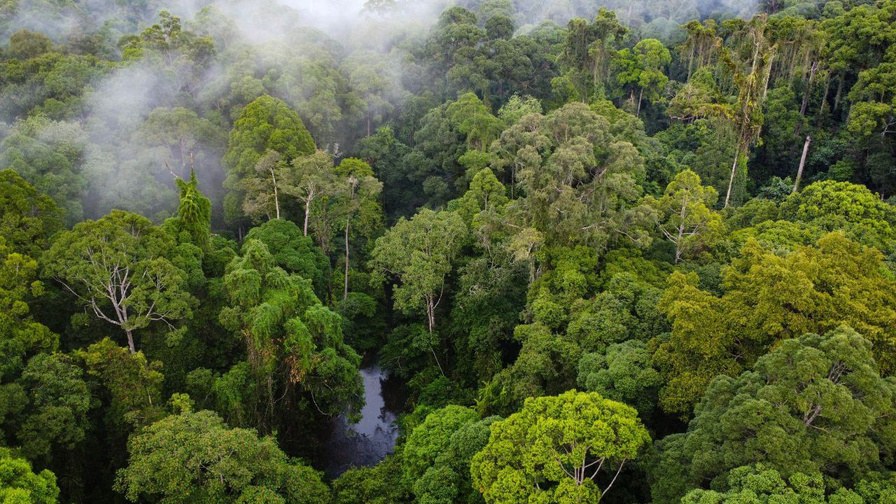
Tawau Hills Park — a repeat hotspot for several of the mammals below.
By Shavez Cheema and Martin Parry, 1Stop Borneo Wildlife
Borneo has over 240 species of mammal, nearly 90 of them fruit-eating or insectivorous bats. Mammal watching here has taken off in the last few years, though it's still nowhere near as popular as birding — most tours still aim for the "usual suspects": Bornean orangutan, Sunda clouded leopard, proboscis monkey, squirrels, gibbons, the western tarsier. This piece isn't about those. It's about the rarest mammals on the island — species most serious watchers and field scientists have never seen, known mainly from camera traps, anecdote or pure chance. Bats are left out deliberately: identifying them properly usually means catching them, which takes time, permits and a whole article of its own.
What makes a mammal "rare" here
The species below are difficult to record in the wild — difficult enough that even experienced mammal-watchers and field scientists acknowledge the challenge of seeing or photographing them. Most of what we know comes from camera traps, anecdotal reports or chance encounters rather than planned sightings. That's usually explained by small population size, though the line between "rare," "under threat" and "endangered" is genuinely blurry. Some of these species may always have been rare, having evolved into habitats that are naturally limited in size and distribution — the Ferret Badger's confinement to Mount Kinabalu is a good example. Others may have declined more recently as habitat has been lost or fragmented. Either way, the mammals discussed here are among the ones most likely to be, or become, critically endangered.
Some of the uncertainty is also simply down to how little we understand of their ecology, diet and behaviour — hard things to study when a species exists in small numbers or lives somewhere difficult to survey.
Five that should get more attention
These are the species we'd suggest belong at the centre of more mammal-watching itineraries.
1. Kinabalu Ferret Badger (Melogale everetti)
/1stop-chun-xing-wong-ferret-badger.jpg)
Photo by Chun Xing Wong, 1Stop Borneo Wildlife.
/1stop-kasbee-ferret-badger-walking.jpg)
Photo by Kasbee@Uguk, Mountain Guide, 1Stop Borneo Wildlife.
Also known as the Bornean Ferret-Badger, this nocturnal mustelid is largely confined to hill and montane cloud forest on Mount Kinabalu, with a scatter of more recent camera-trap records from similar habitat in the Crocker Range. It's genuinely difficult to observe within its known range. The best approach is probably more night walks in Kinabalu Park — the most recent record, from early 2023, was of one disturbed near the summit by a hiker, who described it as "disorientated."
2. Tufted Ground Squirrel (Rheithrosciurus macrotis)
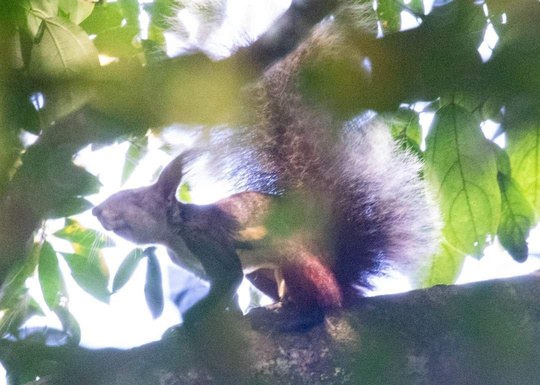
Photo by Shavez Cheema, 1Stop Borneo Wildlife.
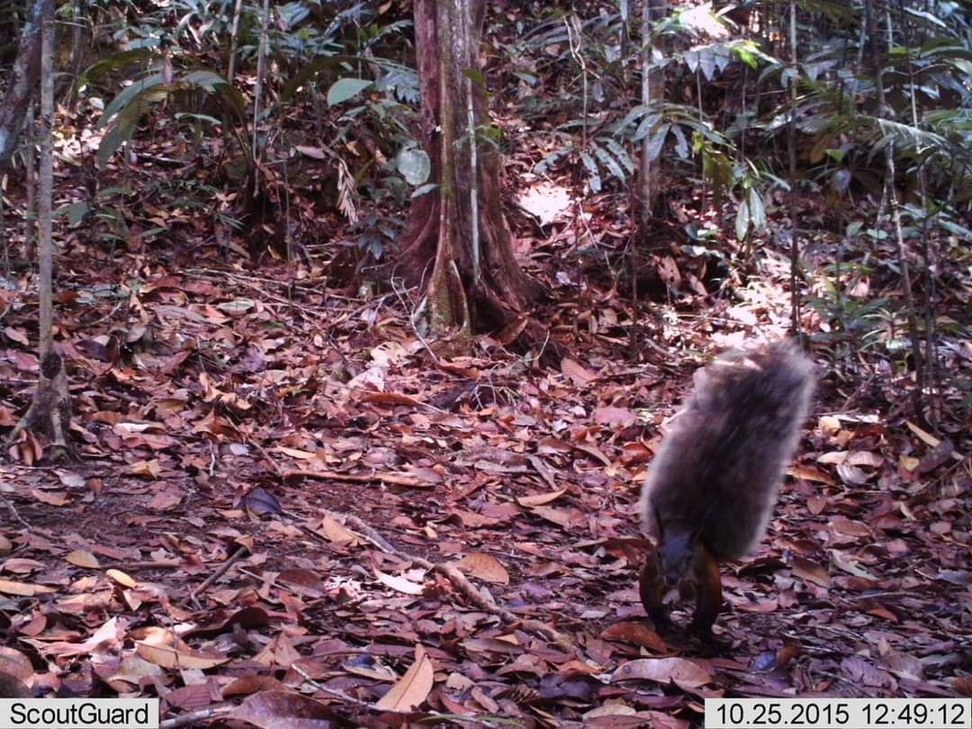
Camera-trap photo, 1Stop Borneo Wildlife.
Often called one of the most magnificent-looking squirrels anywhere, the Tufted Ground Squirrel is largely confined to hill forest, with well-documented sightings across Sabah, Brunei, Sarawak and Kalimantan. It shows up on camera traps fairly regularly but is rarely seen in the field, even by experienced watchers — there's no known dense population anywhere on the island, so it's probably best described as scarce but widely distributed. Two strategies have worked: "random walks" through likely hill forest, and simply hammocking near a productive food source, such as an acorn-fruiting forest.
3. Hose's Civet (Diplogale hosei)
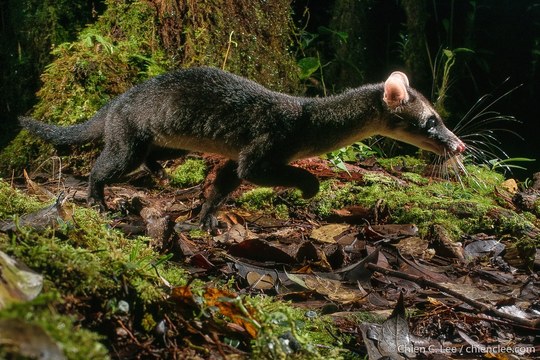
Photo by Chien Lee, via chienclee.com, shared with 1Stop Borneo Wildlife.
This elusive civet is largely confined to montane habitat across many of Borneo's northern mountain ranges; Phillipps notes that Hose's Civet replaces the banded civet above roughly 1,200m in such habitat. Few mammal-watching tours have seen — or even specifically targeted — it, partly because operators are less likely to visit the mountains where it lives. Mathai (2019), reviewing refuges for the species, suggested Tawau Hills Park as a hotspot; Cheema has also seen it in Kinabalu Park, and it's been caught on camera traps on peaks in Brunei and at Mulu. The best approach is probably night walks in Sabah's montane forests — Sayap Substation, Mount Lucia in Tawau, Gunung Alab Substation and similar sites.
4. Bornean Bay Cat (Catopuma badia)
/1stop-hearn-ross-bay-cat.jpg)
Photo by A.J. Hearn & J. Ross, 1Stop Borneo Wildlife.
The rarest and least understood of Borneo's five wild cats. The Bornean Bay Cat seems to be widespread, with records from hill forest around Kuching, national parks in Kalimantan, Brunei's interior forests, and Sabah's Danum Valley, Deramakot, INIKEA, Kinabalu and Tawau Hills Parks. Everywhere, it's elusive and usually detected only by camera trap — Tawau Hills and INIKEA are the most productive sites. Despite these records, no mammal tour has recorded (or even photographed) a Bornean Bay Cat; it may be that this cat avoids forest trails and/or isn't territorial. Anecdotal evidence from guides suggests "random" rainforest walks and night drives give the best chance of a sighting.
5. Bornean Sun Bear (Helarctos malayanus euryspilus)
/1stop-shavez-cheema-sun-bear-climbing.jpg)
Photo by Shavez Cheema, 1Stop Borneo Wildlife.
/1stop-shavez-cheema-sun-bear-closeup.jpg)
Photo by Shavez Cheema, 1Stop Borneo Wildlife.
There are two subspecies of sun bear: H. m. malayanus, widespread across tropical Southeast Asia, and the smaller H. m. euryspilus, found only on Borneo. Sadly, the Bornean subspecies is easy to see only at dedicated sun bear centres — actually finding a wild Sun Bear is rare. Cheema has seen it three times in the wild: twice crossing the road during night drives in a Brunei forest reserve, and once in the rainforest of Deramakot, just behind the accommodation, presumably drawn in by a food-disposal area nearby.
Borneo's langurs
Most of Borneo's langurs are declining, with several under threat of extinction. Red langurs are the exception — commonly seen, with a strong population at Tawau Hills Park, and not something we'd call rare. Grey langurs are a different story: a group of four closely related, endemic species, previously treated as races of one species. However they end up classified, all four are rare, and together with the Sarawak langur they form our second "top five" of rare endemic Bornean mammals. For more on the taxonomy, see Phillipps (2023), pages 164–167.
Sabah Grey Langur (Presbytis sabana)
/1stop-yulinda-wahyuni-sabah-grey-langur.jpg)
Photo by Yulinda Wahyuni, 1Stop Borneo Wildlife.
Found mainly in East Sabah, the Sabah Grey Langur is probably the easiest of the four to see, with good records from protected areas at Tabin, Tawau Hills and Sepilok.
Hose's Langur (Presbytis hosei)
/1stop-silver-peter-hoses-grey-langur.jpg)
Photo by Silver Peter and 1Stop Borneo Wildlife.
The Hose's Langur now has a much reduced population, confined to small pockets in Sabah such as Membakut, though there are strongholds in Brunei, especially in and close to Temburong National Park.
Kutai Grey Langur (Presbytis canicrus)
/1stop-fredrikkson-kutai-grey-langur.jpg)
Photo by G. Fredrikkson, 1Stop Borneo Wildlife.
Also known as Miller's Grizzled Langur, this species was once common in Kutai, Kalimantan, but uncontrolled habitat destruction and illegal hunting — both still ongoing — have made the Kutai Grey Langur rare. Very few recent records exist, and the parks where it's found are difficult to reach.
Kalimantan Grey Langur (Presbytis frontata)
/1stop-milan-janda-kalimantan-grey-langur.jpg)
Photo by Milan Janda, 1Stop Borneo Wildlife.
Also known as the White-fronted Langur, this species is still reported from South Sarawak and Central Kalimantan, and has a wider distribution than the other three grey langurs — but it's rare throughout its range and, like the Kutai Grey Langur, now usually confined to inaccessible habitat.
Sarawak Langur (Presbytis chrysomelas): red and black morphs
/1stop-jason-teo-bornean-banded-langur-black-morph.jpg)
Black morph. Photo by Jason Teo, 1Stop Borneo Wildlife.
/1stop-sarawak-forestry-bornean-banded-langur-camera-trap.jpg)
Red morph, camera trap. Photo/record: Sarawak Forestry, Ampeng et al. (2023), via 1Stop Borneo Wildlife.
This langur of primary rainforest, also known as the Bornean Banded Langur, was once common in Sarawak and is now under threat of extinction. The black morph survives in small populations in West Sarawak and Kalimantan; the red morph might still be seen in two Sarawak parks, though very few good photographs of it exist. Recent Sarawak sightings come from Tanjung Datu National Park, about three hours from Kuching, and from Maludam Park, 130km from Kuching.
Some other rare mammals of Borneo
These species are also usually considered rare and difficult to photograph. Only one is endemic — the Bornean porcupine. Two others below are also discussed further in the "mammal myths" section that follows.
Dugong (Dugong dugong)
/1stop-borneo-wildlife-dugong-dock.jpg)
Photo: 1Stop Borneo Wildlife.
/1stop-ismail-ahmad-dugong.jpg)
Photo by Ismail Ahmad, 1Stop Borneo Wildlife.
The Dugong is a marine mammal occasionally documented along parts of Borneo's coast. Some estuaries in Brunei — Brunei Bay, for example — and in Sarawak, around the town of Lawas, have had recent recordings of dugongs either feeding on sea grass or, less happily, caught accidentally by fishermen.
Otter Civet (Cynogale bennettii)
/otter_civet.jpg)
Photo by Stavenn, CC BY-SA 4.0, via Wikimedia Commons.
A very difficult species to see, but there are recent records from watercourses in several Sabah parks, notably Danum Valley, the Maliau Basin and Deramakot. The Otter Civet is semi-aquatic and largely tied to rivers and streams within good forest.
Hairy-nosed Otter (Lutra sumatrana)
/1stop-salashour-hairy-nosed-otter.jpg)
Photo by Saliman Salashour, 1Stop Borneo Wildlife.
This otter is associated with peat swamp and lowland rivers, with recent sightings recorded in Long Pasia in Sabah, as well as in the Kinabatangan and Tabin.
Pen-tailed Treeshrew (Ptilocercus lowii)
/1stop-albert-tingangan-pen-tailed-treeshrew.jpg)
Photo by Albert Tingangan, 1Stop Borneo Wildlife.
A beautiful, strictly nocturnal tree shrew with very few records from anywhere in Borneo. Cheema recorded one in 2022 at Gunung Alab; the photograph used in the Pocket Guide to Mammals of Borneo was taken on the island of Labuan several years earlier.
Bornean Porcupine (Hystrix crassispinis)
/1stop-shavez-cheema-bornean-porcupine.jpg)
Photo by Shavez Cheema, 1Stop Borneo Wildlife.
Porcupines are regularly seen in Borneo, but the only endemic one — this species, also known as the thick-spined porcupine (Hystrix crassispinis) — is difficult to see, despite sometimes being described as "locally common" in North Borneo. There are recent records from Teraja, Brunei. It's much less frequently seen in South Sarawak and Kalimantan, and elusive across most of the island.
Mammalian myths: species with no reliable records
Some mammals are routinely listed in publications on Borneo's mammals despite there being little strong evidence they currently exist here — a point of particular interest to co-author Cheema, who has discussed these species at length with established authors including Quentin Phillipps and John Payne, and with guides, hunters and scientists in the field. In at least one case, the smokey flying squirrel, the strongest evidence is a decades-old memory rather than a photograph. This section isn't a claim these animals don't exist on Borneo — only that the current evidence is weak, and we'd welcome being proved wrong.
Smokey Flying Squirrel
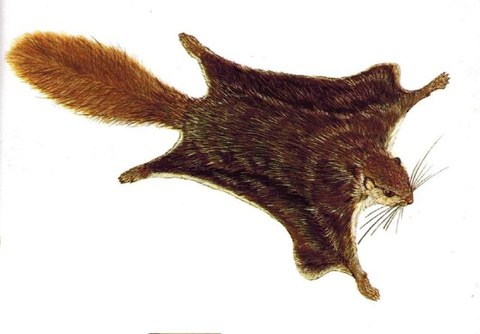
Illustration from Phillipps' Field Guide to the Mammals of Borneo, by Quentin Phillipps.
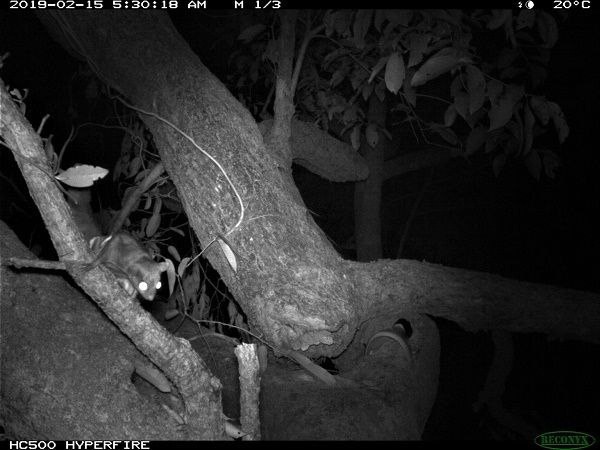
Jessica Hayson's unclear image of a possible smokey flying squirrel, Sabah (Banks, 2021).
There's still no photograph of this species alive in the wild in Borneo, and the authors don't know of anyone who has one. Quentin Phillipps' field guide lists it from Poring, but on checking with him directly, he confirmed he'd only seen it with local hunters in his late teens or early twenties — likely decades ago — and that this could have been a different species, or one that has since disappeared from the area. As reported by Banks (2021), Jessica Hayson, working with colleagues in a forest reserve on Sabah's east coast, obtained an unclear image of what might be this squirrel, but it isn't conclusive.
Eurasian Otter
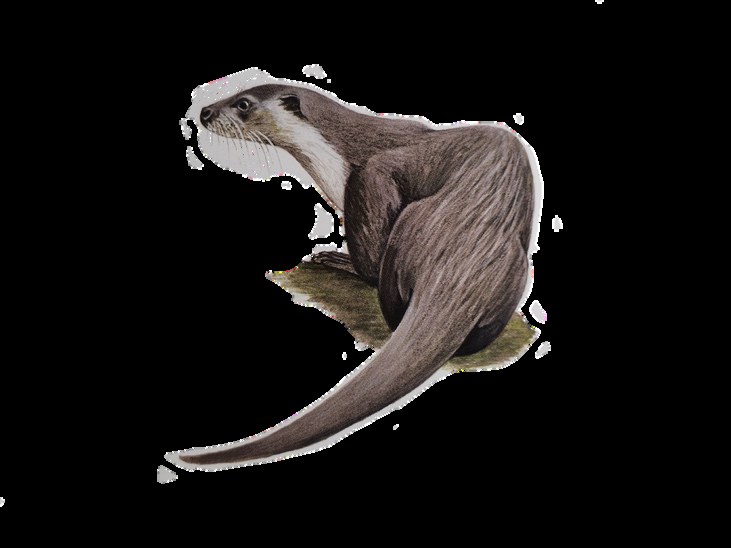
Illustration from Phillipps' Guide to the Mammals of Borneo.
How is it possible this species has only ever been photographed once, on a single date in August 2014, by one long-term visitor to Danum Valley — when guides who've spent years there, plus mammal-watching tours and field scientists running countless hours of camera trapping, have never documented it? Cheema traced other tourists present at Danum Valley when the photo was taken; those he reached only had photographs of smooth-coated otters. Quentin Phillipps has confirmed that when compiling his field guides, he insisted on seeing the original photograph, and it would be valuable if that image and the original location could be found again so a proper survey could be done. Without that or any other supporting evidence, there's a real case for doubting the presence of the Eurasian otter in Borneo.
Emily's Flying Squirrel
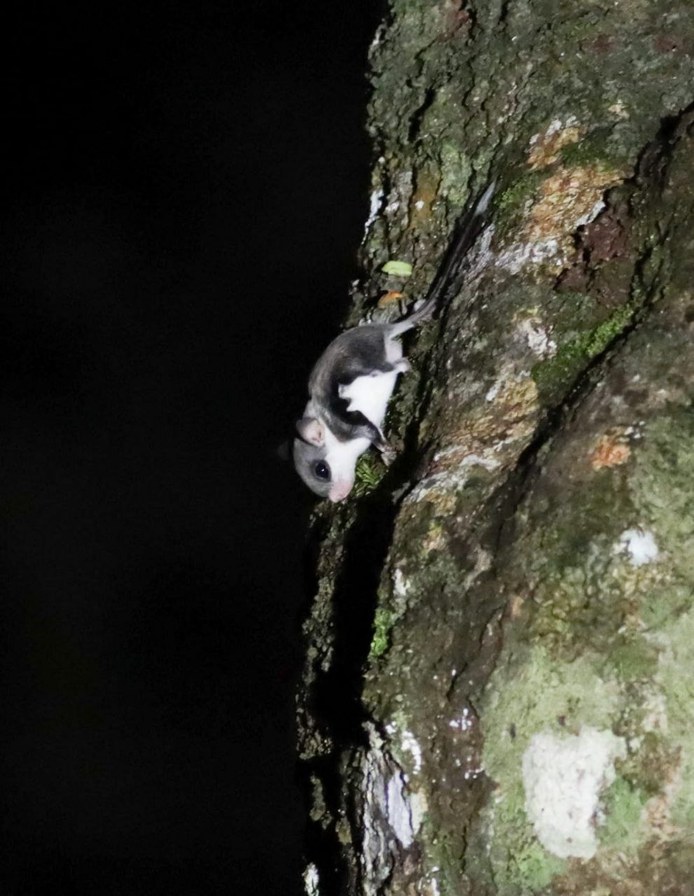
Photo by Joep Duijvestijn.
Does this squirrel really exist, or is it a mistaken record of the similarly rare Hose's pygmy squirrel — or is it now extinct? An early report from 1901 described a pair collected on the Baram River by Charles Hose, then Governor of Marudi, Sarawak — the same Hose after whom Hose's pygmy squirrel is named. Emily's flying squirrel has possibly only been recorded twice in total: Hose's original pair, and a far more recent record by Duijvestijn (2023). The question is still open — are these two different species, or was each sighting actually a juvenile or poorly preserved adult Hose's pygmy flying squirrel?
Optimising your search for Bornean mammals
1. Undertake many drives

The more drives you make with a good driver and spotter, the better your chances — and the greater the distance covered, the better again.
2. Take random walks
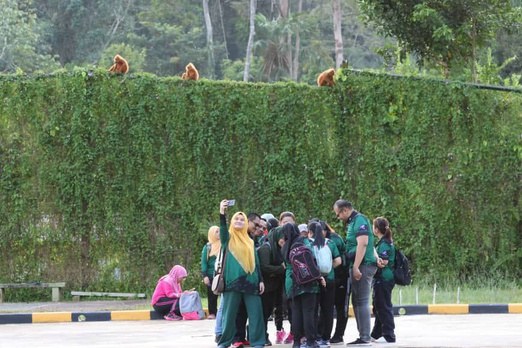
The more you explore on foot in suitable habitat, the better your chances of seeing animals.
3. Do background research and network
Better preparation for a habitat and its likely species improves your chances. Read articles and journals, check relevant websites, and talk to local guides and scientists.
4. Use thermal scopes and red lights
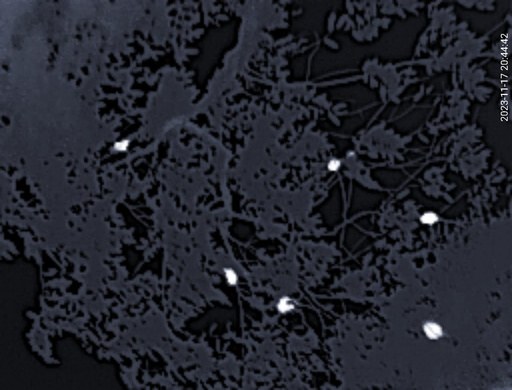
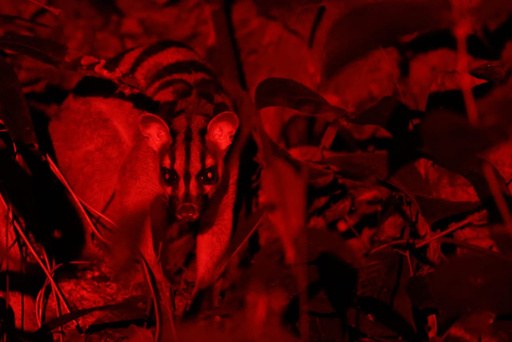
A banded civet found using red light.
Thermal scopes are a good, enjoyable way to search for mammals at night — relying only on "non-red light" to catch eye-shine can mean missing animals that happen to be looking away. The authors have recently been using the Xinfrared thermal scope recommended by Jon Hall in Tawau. A bright red light can give better, longer observation, though it may not suit night photography as well; recommended red lights include the Fenix TK25 and the Wolf-Eyes Dingo Set.
5. Maximise your travelling
Visiting as many of the best parks as possible, and spending as long as you can in each, increases your chance of seeing target species. Like more drives, this costs time, effort and planning — but it pays off.
6. Understand mammalian ecology
Photo by Yulinda Wahyuni, 1Stop Borneo Wildlife.
Many mammals appear elusive largely because their ecology is poorly understood. Knowing a species' food source can considerably raise your odds — fig trees are keystone species in Bornean rainforest, and a good fruiting fig can draw in an array of fruit-feeders, mammals included. Oak acorns and other nuts are a major food source for squirrels and porcupines; finding out where and when these trees are fruiting is a solid mammal-watching strategy.
7. Use the Borneo Mammal Club

A reliable, open way for anyone in Borneo to share mammal records — not just guides and travel companies. It's a good place for up-to-date information, and for posting your own records to help build an unbiased picture.
8. Read Mammalwatching.com's Borneo reports
Trip reports from fellow mammal-watchers, with notes, ideas, photographs and experiences from their own visits to Borneo — another good source of reliable, recent information.
Sources of further information
- Cheema, S. A Pocket Guide to Mammals of Borneo
- Phillipps, Q. Phillipps' Field Guide to the Mammals of Borneo
- Parry, M. (2023) Review of "The Hairy Sumatran Rhino" by John Payne
- Parry, M. (2023) Review of "An Illustrated Guide to Bornean Orangutan Food Plants" by John Payne & Zainal Zahari Zainuddin
- Mathai, J. (2019) ScienceDirect
- Banks, G.S. (2021) University of Kent
- Duijvestijn, J. (2023) Mammalwatching.com
This article is adapted from "The Rare Mammals of Borneo" by Shavez Cheema and Martin Parry of 1Stop Borneo Wildlife.
If you're planning a wider mammal-watching trip, the mammal watching guide covers the parks, night drives and thermal-imaging basics that make sightings like these possible in the first place.