/u_pangolin.jpg)
Sunda pangolin, on a night safari at Deramakot.
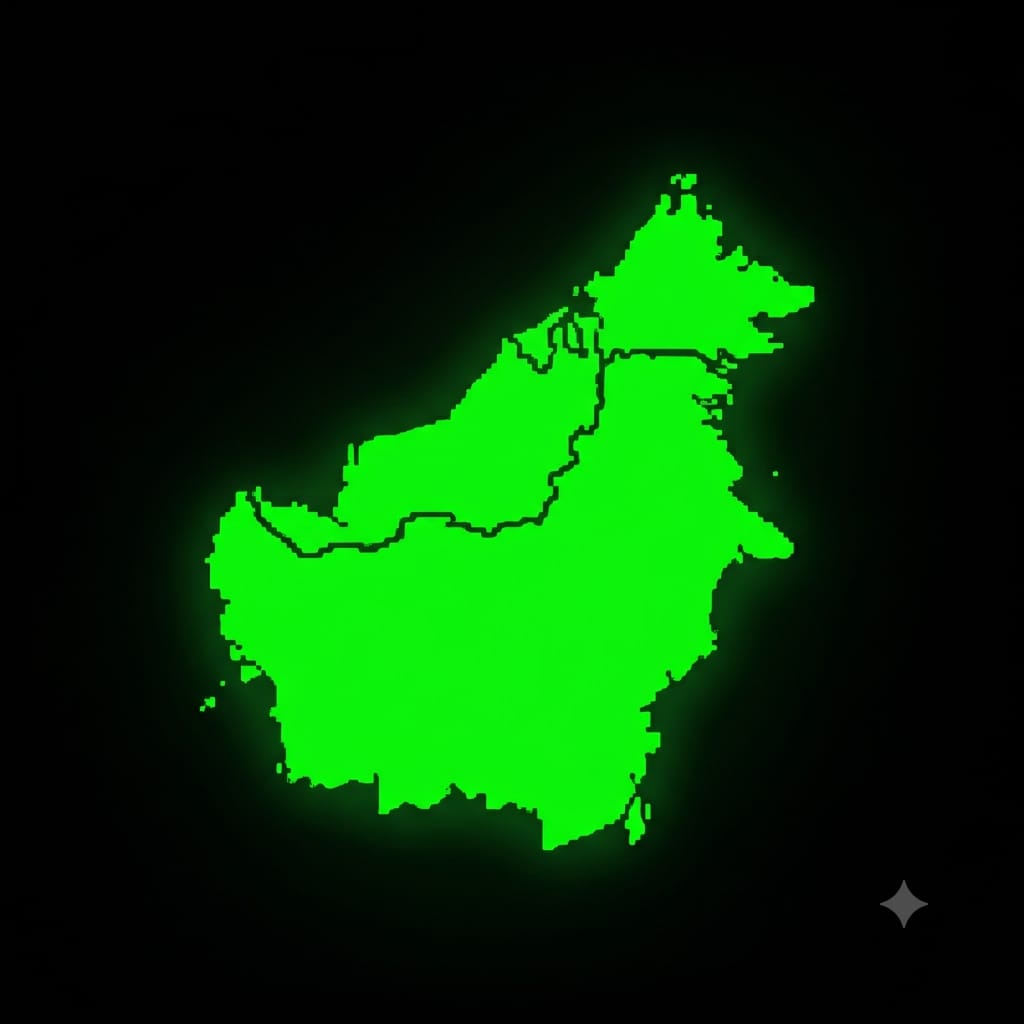
Borneo is one of the best places in the world to go mammal watching. The island holds well over 200 mammal species — five wild cats, the full run of civets, pangolin, colugo, sun bear and orangutan among them — across lowland rainforest, river systems, peat swamp and mountains, and a string of reserves from Sabah to Sarawak and Kalimantan that make them reachable. This is a guide to where to go, how the nights are actually run, and what you can realistically hope to find.
What mammal watching is
Mammal watching is the mammal equivalent of birding: people keep lists, chase species they haven't seen, and travel to specific places for specific animals. The difference is the hours. Most of the work happens at night, from a slow-moving vehicle or on foot with a torch, and the targets are mostly animals the average visitor has never heard of — a colugo gliding between trees, a linsang crossing the road, a pangolin working through leaf litter. Finding one is a genuine event. It is the closest thing wildlife watching has to treasure hunting.
It is a small pursuit but a growing one, and it has changed what people expect to see in Borneo. Animals that were described in field guides as "rarely observed" or "known mainly from camera traps" ten years ago — clouded leopard, pangolin, otter civet — now turn up in trip reports multiple times a year. That is not because they became more common. It is because a handful of people started going to the right places, staying out much longer, and using better equipment.
How it started here
The turning point was the realisation that Sabah's production forest — not its national parks — was the best place to watch mammals. Deramakot Forest Reserve was certified by the Forest Stewardship Council in 1997 and has been worked on a reduced-impact logging cycle ever since. That was the Sabah Forestry Department thinking a long way ahead: take less, leave the forest standing, and there will still be a forest for the generation after next. What it left behind is close to a perfect viewing setup — tall, structurally intact forest with a dense network of graded roads through it, very few people, and, most importantly, no restriction on driving all night.
Camera-trap surveys through the 1990s and 2000s kept turning up an extraordinary carnivore list from these logged reserves, in some cases better than from nearby primary forest. Researchers knew the animals were there long before tourists did. What opened it up to everyone else was Jon Hall's trip report — the first proper write-up of what Deramakot's roads produced at night, circulated through the mammal-watching community online. Everyone else followed.
Two things followed from that. Sabah now has a handful of local guides who genuinely specialise in nocturnal mammals rather than treating them as a bonus on a birding trip. And the standard has risen: a good night in Deramakot is now measured in rare species, not in whether you saw anything at all.
Where to go
Deramakot Forest Reserve
The flagship, and the reason most people come. All five of Borneo's wild cats have been recorded here — Sunda clouded leopard, marbled cat, Bornean bay cat, flat-headed cat and Sunda leopard cat — along with essentially the full civet list, banded linsang, Sunda pangolin, colugo, several flying squirrels, slow loris and tarsier. Nothing is guaranteed and the bay cat in particular remains a matter of luck, but clouded leopard is a realistic target here.
Practicalities matter more here than anywhere else on the island. Accommodation is limited, run by the Sabah Forestry Department, and books out months ahead. You need a permit, a 4WD and a driver who knows the road. Most people go through an operator for exactly that reason. Beluran Safaris works the same country next door and is worth adding on a repeat visit.
Tabin Wildlife Reserve
Much easier logistics — there is a lodge, you can drive in from Lahad Datu, and it works as a first stop. The road network is good and the reserve is large, with elephants, Bornean bearded pig, Malay civet and a reasonable chance of clouded leopard. Tabin is especially good for Sunda leopard cat: the reserve borders oil palm, and the cats move in and out along that edge looking for food, so you see them in numbers you won't manage elsewhere. The mud volcano draws animals in and is worth sitting at.
Danum Valley
Primary lowland dipterocarp forest, and the best place on this list for daytime mammals: Bornean orangutan, red leaf monkey, Bornean gibbon, southern pig-tailed and long-tailed macaque, and a long list of lowland squirrels — Sunda giant, Prevost's, plantain, horse-tailed, slender and the ground squirrels among them. At night the road to the field centre produces slow loris, tarsier, colugo, flying squirrels and civets. Cats are harder here than at Deramakot — the forest is taller and denser and there is less road to work with — but the overall mammal experience is richer.
Kinabatangan River
A different method entirely: night boats rather than night drives. Most mammal watchers come here for one animal — the flat-headed cat, which hunts the river edge and is about as good as a sighting gets in Borneo. Working the banks and the oxbow lakes by spotlight also turns up civets in the riverside trees, otters and sleeping birds. Proboscis monkey, macaque and hornbill are close to guaranteed by day, and elephants pass through seasonally.
Sepilok and the Rainforest Discovery Centre
The most accessible nocturnal wildlife in Sabah. The canopy walkway and the trails around it produce western tarsier, slow loris, colugo and flying squirrels gliding out at dusk, all within half an hour of Sandakan. If you only have one night, spend it here.
Sarawak and beyond
Bako National Park has proboscis monkey, Bornean bearded pig, colugo and easy night walks a short boat ride from Kuching. Kubah is better known for frogs but is good for treeshrews and squirrels. Mulu is about bats — the evening exodus from Deer Cave is one of the great wildlife spectacles anywhere. On the mountain, Kinabalu Park and Poring hold montane species that occur nowhere lower: mountain treeshrew, Bornean ferret badger, summit rat and Kinabalu's endemic squirrels. Maliau Basin is superb and correspondingly difficult, and is best treated as a second or third trip.
Why the night drives need to be longer
This is the single biggest difference between a wildlife holiday that includes a night drive and a mammal-watching trip. A lodge night drive is typically 60 to 90 minutes, leaving at 8pm, on a fixed loop, with the guide narrating. A mammal-watching night drive runs three to seven hours, and frequently does not finish until the small hours.
The reason is simple: the longer you stay out and the further you go, the more you see. There is no shortcut and no clever hour to target. A trip that comes home at 9.30pm every night is missing most of what it came for.
The other half of it is stamina. Long drives, night after night, mean sleeping through the day and accepting that you will not do much else. That is the real limiting factor on most trips — not luck, and not equipment.
Thermal imagers
The handheld thermal imager has changed nocturnal mammal watching more than anything else in the last decade. A torch works by eyeshine, which means the animal has to be facing you, in the open, with the beam on it. A thermal picks up body heat directly — through leaves, through a screen of branches, and regardless of which way the animal is looking. Things that were invisible from a vehicle ten years ago are now routinely detected: a colugo pressed flat against a trunk, a civet curled in a fork, a pangolin moving through leaf litter twenty metres off the road.
Worth knowing before you buy or borrow one. Thermal will not see through glass, so it has to be used out of an open window or from the back of an open vehicle. Heavy rain and very high humidity — both routine in Borneo — cut effective range noticeably. Detection range on the entry-level units (Pulsar and HIKMICRO make the ones most people carry) is fine for roadside work but drops off fast in dense vegetation. And a thermal does not replace a good light: a dimmable warm-white LED spotlight, used at the lowest setting that does the job, is still the core tool.
Light discipline is part of the etiquette here. Keep the beam off the animal's eyes and use the edge of the beam rather than the centre — better still, use a red light, which most nocturnal mammals barely register and which lets you watch for far longer without disturbing anything. Get the identification and the photo, then move on and leave it alone. The difference between a considerate drive and an inconsiderate one is entirely in how long the light stays on.
The species you won't see any other way
Every wildlife trip to Borneo has a chance at orangutan, proboscis monkey and Bornean elephant. The species below are different. They are not rare in the sense of being nearly gone — they are rare in the sense that seeing one requires being in a particular kind of forest, at a particular hour, with a light in your hand.
/otter%20civet.jpeg)
Otter Civet
EndangeredA civet that has gone the way of an otter — dense dark fur, a broad flattened muzzle with long white whiskers, and nostrils and ears it can close underwater. It is tied to water: peat swamp, riverine forest, roadside ditches and puddles. Almost every recent sighting has come from someone driving slowly past standing water at night, which is to say from a proper night drive and nothing else. Deramakot is the most reliable place anyone has found for it, and "reliable" here still means a handful of records a year.
/jl-sunda-stink-badger-1.jpg)
Sunda Stink Badger
TeleduBorneo's skunk — listed in the field guides as the Sunda stink badger — and one of the strangest-looking animals on the island. A squat, pig-snouted, black animal with a white stripe running back over the crown, waddling through leaf litter with its nose down. It is not a badger; it sits with the true skunks, and it defends itself the same way, with a spray from anal glands that carries a remarkable distance. Almost entirely terrestrial and almost entirely nocturnal, which makes it a night-drive animal and very little else. Deramakot and Tabin are the usual places.
/pen%20tailed%20tree%20shrew%20credit%201stopborneo.jpeg)
Pen-tailed Treeshrew
Family of oneThe only nocturnal treeshrew, and the sole living member of its own family — every other treeshrew on Earth sits in a different one. It is grey, mouse-sized, has huge dark eyes, and carries a naked tail tipped with a flat spray of white hairs like a quill pen, which is where the name comes from. It is also the animal behind one of the odder pieces of mammal research anywhere: in Peninsular Malaysia it feeds on the naturally fermented nectar of the bertam palm, taking in quantities of alcohol that would badly affect a human of the same weight, with no sign of intoxication. Finding one means walking slowly with a torch in the right patch of understorey. It will not come to you from a vehicle.
Others in the same category, all worth reading up on before you go: Hose's Civet, a Bornean endemic of the montane interior and one of the least-recorded carnivores in Asia; the Marbled Cat, small, thick-tailed and beautifully patterned, and the great prize of any Deramakot trip; the Sunda Clouded Leopard, the island's largest predator and the animal most people are quietly hoping for; the Banded Linsang, a long, low, boldly banded predator that looks like nothing else; and the Sunda Pangolin, critically endangered and heavily trafficked, and increasingly the sighting people are most pleased to have made.
Trip reports
Two write-ups of what these trips actually produce: Borneo's Rare Mammals Tour 2024 from Royle Safaris, with a Sunda Clouded Leopard hunting in daylight, and Sabah, Borneo, July 2022, Jon Hall's mammalwatching.com report from Deramakot, Kinabalu and Sayap, which turned up a Bay Cat and a Sun Bear. More on the trip reports page.
Planning a trip around this
Season. Sabah is a bit wetter from roughly November to February, and the unsealed roads that make Deramakot work are at their worst then — but it is also quieter, with fewer tourists about. Rain is possible in any month, and a wet night is not a lost night; usually the opposite. Some of the best sightings come straight after rain, when Otter Civet, Sunda Stink Badger, Moonrat and Malayan Porcupine are all noticeably more likely to be out.
Logistics. Deramakot needs booking well in advance — the Deramakot page here has the booking contact and the official site on it, along with the permit and vehicle you'll need. Seven nights is the standard for a mammal-watching group, and some operators run fourteen-night trips there; the tour operators page lists who runs them. Build in more nights than feels necessary, at fewer sites.
Guides. This is the one thing worth paying properly for. A guide who does this specifically — who knows which stretch of road produced a top-tier mammal last week, who will keep going until 2am, and who can tell species apart by the colour of the eyeshine at range — is the difference between a good trip and a frustrating one. It is a small field: search for Alcey, Henry, Adie and Siti and the same names keep coming up.
Expectations. You will blank on nights. You will spend hours seeing nothing but sambar and civets. Ten seconds can be the difference between a dead night and the best night of the trip.
Pick the locations you want to visit and the species you want to look for, then send the finished plan straight to an operator.