/bornean%20peacock%20pheasant.jpg)
Bornean peacock-pheasant at Telupid — a bird that was effectively unseeable in Sabah a decade ago.
There's a particular silence that settles over a rainforest just before dawn — the cicadas haven't started, the mist is still low over the canopy, and something is moving in the undergrowth that you can't quite see. For a growing number of visitors to Sabah, that silence is now being broken not by the usual chatter of bulbuls but by the soft, deliberate footsteps of birds that almost nobody had ever laid eyes on before. One thing is mostly responsible for that: the bird hide.
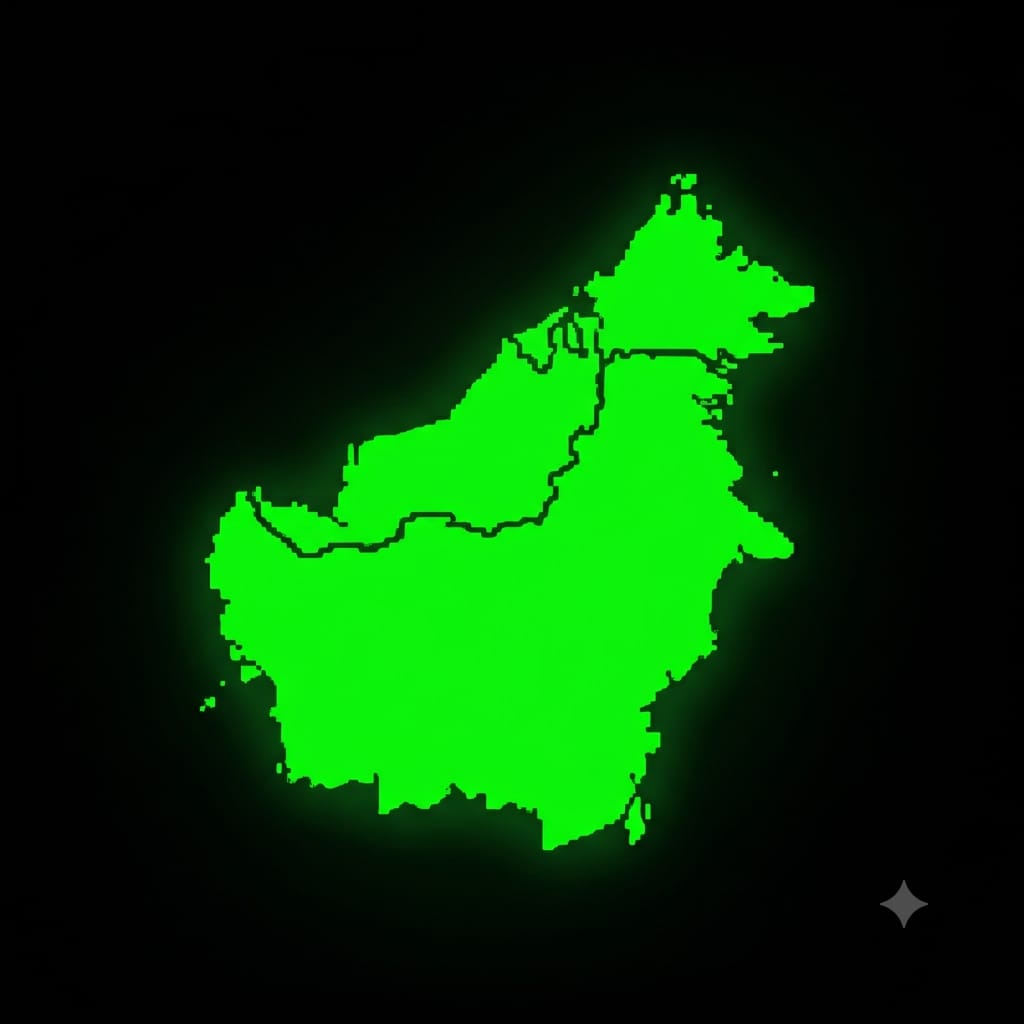
Over the last five or six years, a scattering of hides — some purpose-built, others little more than a tarpaulin and a few planks nailed together — has spread across Sabah, from the slopes of Mount Trus Madi to the lowland forests around Telupid, Kinabatangan and Lahad Datu. Between them they've turned Sabah into arguably the best place on Earth to see Borneo's rarest and most secretive birds — species field guides used to describe as "historically recorded" rather than anything you might reasonably expect to see.
How it started here
The turning point was 2020. When international travel shut down, Sabah's bird and wildlife guides — people whose entire livelihood came from taking visiting birders around Kinabalu Park, Danum Valley and the Kinabatangan River — found themselves with something they'd rarely had before: time, and no income coming in.
Rather than wait the pandemic out, several guides turned to a problem that had frustrated visiting birders for decades — how do you reliably see Borneo's most elusive forest-floor species, the pheasants, partridges and pittas that live hidden in dense undergrowth and vanish at the first footstep? The answer, borrowed from bird photography traditions elsewhere in Asia, was to build a hide: a simple blind near a feeding or watering spot, with food quietly put out to draw birds into the open, and enough patience — sometimes years of it — to let the birds get used to a structure sitting nearby.
It took a lot of unpaid trial and error. A guide would find an area a target species was known to pass through, set up a modest bait station, and wait, day after day, slowly getting a wary bird used to a hide close by. Only once a bird's routine became dependable enough could a hide open to paying visitors. Several of Sabah's best-known hides trace their beginnings to exactly this: guides who couldn't lead tours instead spending idle months in the forest, quietly laying groundwork for what would become, once borders reopened, one of Sabah's most distinctive tourism products.
The result is small-scale, community-based ecotourism that has quietly reshaped birdwatching in Sabah. Villages and individual guides now manage their own hides, charging entrance fees that support local livelihoods and, in more than one case, giving forest that might otherwise have been logged or cleared for oil palm a direct reason to stay standing.
One name comes up again and again: Khairulikhwan Matnin, a local guide from the Telupid area, widely credited as the driving force behind several of Sabah's most important hides, starting with the peacock-pheasant hide at Telupid and carrying through to newer sites at Taliwas and Mount Silam. His approach — years of patient, unglamorous groundwork before a single paying visitor ever sits inside a hide — has become something of a template for the whole movement.
Where to go
Telupid and Kampung Bestaria
/jf-bornean-peacock-pheasant.jpg)
A male Bornean peacock-pheasant in full display at the Telupid hide.
No story captures the power of the bird hide better than that of the Bornean Peacock-Pheasant (Polyplectron schleiermacheri), one of the most poorly known pheasants on the planet. First collected in Sabah in the 1890s in the far northern Paitan area, that forest was cleared long ago, and even survey work in the late 1930s couldn't find birds there. For most of the twentieth century it was essentially a ghost in Sabah — camera-trap surveys covering tens of thousands of trap-nights, aimed mainly at mammals, turned up not a single one. A small population was finally confirmed by camera trap in the Kuamut Forest Reserve in 2016, proving the bird still clung on in central Sabah, but actually seeing one alive remained close to impossible.
Then, near the small town of Telupid, Khairulikhwan Matnin began noticing peacock-pheasants using a patch of forest near an oil palm plantation. Years of patient, low-key habituation followed before the site was ready for visitors. Management later passed to a community cooperative formed by residents of nearby Kampung Bestaria (also spelled Bistaria), which now runs it as Bestaria Eco-tourism, alongside the Ulu Telupid Birding Centre.
Reaching the hide means a walk of a few hundred metres through forest at the end of a dirt road, and visitors typically need to be in position well before dawn, ready for the best part of a day — sometimes two — waiting quietly inside. The payoff: a male Bornean peacock-pheasant stepping cautiously into view, its plumage speckled with the iridescent blue-green "eyes" that give the species its name, occasionally fanning its tail if a female is nearby. Still notoriously skittish, but its regular appearances here have turned a bird once considered practically unseeable in Sabah into one a determined visitor now has a genuinely good chance of photographing.
The area has grown into a small cluster of hides rather than a single site. A second hide, at a small wetland pond near the same village, targets the Straw-headed Bulbul, now critically endangered across much of Southeast Asia because of the caged-bird trade and rarely encountered in the wild outside a few strongholds like this. Because the bulbul and the peacock-pheasant tend to show up around the same time of day, most visitors have to pick one hide over the other unless they can stay two nights. A third site, reached by a longer trek, gives access to the Blue-banded Pitta. While waiting at the peacock-pheasant hide, patient visitors sometimes get the bonus of an endemic Sabah partridge or a Crested Fireback passing through.
Mount Trus Madi
/cc-bulwer-s-pheasant.jpg)
Bulwer's pheasant — the Trus Madi hides turned it from a career-long ambition into a few hours' wait.
If the Bornean peacock-pheasant is the lowland ghost, the Bulwer's Pheasant is its montane counterpart — a bird so rarely photographed in the wild that "getting Bulwer's" long ranked as one of the least realistic ambitions in Asian birding. The forests of Mount Trus Madi, Malaysia's second-highest peak after Kinabalu, changed that.
Two hides now operate on the Trus Madi range near the Kupu-Kupu Gate, at around 1,300 metres. One, run by a guide known as KK Lee, has become one of the most comfortable hides in Sabah, with proper bathroom facilities and a kitchen area. A second, more rustic hide nearby is run by another local operator, CP Song. Both were built independently, specifically to give birders a real shot at Trus Madi's rarer sub-montane and lower-montane specialities.
The star at both is the male Bulwer's pheasant, its extraordinary white tail fanned against dark, iridescent plumage and bare blue facial skin — a bird groups now often see within a few hours of settled waiting, when a decade ago they might not have seen it at all. It's far from the only draw: visitors regularly get Crested Partridge (the "Roul-roul"), red-breasted partridge and crimson-headed partridge, along with Bornean Banded-Pitta and the shy Dayak blue flycatcher. The wider forests add white-crowned shama, Bornean leafbird and, with luck, blue-banded pitta.
Kinabatangan Bird Hide
/rn-giant-pitta-1.jpeg)
Giant pitta — almost everywhere else in Borneo, a fleeting shape in the leaf litter.
Downstream on the Kinabatangan River, the Kinabatangan Bird Hide is known among serious birders for one bird above all others: the Giant Pitta, the largest and among the most sought-after members of the entire pitta family. It sits in forest reached from the village of Batu Puteh, whose community cooperative, KOPEL, has run one of Sabah's longest-standing community forestry and ecotourism programmes here for more than two decades, in partnership with the Sabah Forestry Department, centred on the neighbouring Pin Supu Forest Reserve — at over 4,600 hectares, the largest protected forest reserve in the Lower Kinabatangan floodplain. That long stretch of looking after the forest, recognised in 2021 when Batu Puteh was named a UN World Tourism Organization Best Tourism Village, is what eventually made a reliable giant pitta hide possible here.
Unlike the "trained" hides at Telupid and Trus Madi, the Kinabatangan Bird Hide leans on the quality and protection of the surrounding floodplain forest to give visitors a genuine chance at the giant pitta at close range — a bird that, almost everywhere else in Borneo, amounts to a fleeting shape in the leaf litter. The wider Pin Supu forest and the KOPEL-run Tungog Rainforest Eco Camp, built beside an oxbow lake a short boat ride from the village, add plenty more: Hooded Pitta and Black-crowned Pitta are regular residents, four hornbill species — white-crowned, wrinkled, oriental pied and Rhinoceros — turn up often, and the riverbanks and oxbow lakes hold storks, darters and the globally endangered Storm's Stork. Not every important hide in Sabah is a blind bolted together overnight; sometimes it's the product of a community's decades-long decision to keep its forest standing.
Taliwas
/km-bornean-ground-cuckoo-1.jpg)
Bornean ground-cuckoo — arguably the single hardest bird on the island to see.
East of Lahad Datu, the Taliwas River Conservation Area — roughly 9,500 hectares of lowland and unusual ultramafic forest managed by Yayasan Sabah — is one of the newer, and among dedicated birders one of the most quietly thrilling, chapters in Sabah's bird-hide story. Long known mainly as a camping and recreation spot, Taliwas got its own hide through the same push that built Telupid, and by the same guide — this time targeting arguably the single hardest bird on the island to see: the Bornean Ground-Cuckoo.
A large, secretive, pheasant-like cuckoo with iridescent purple-green wings and a pale blue-green face, it forages on the floor of pristine lowland rainforest, often trailing ant swarms or foraging bearded pigs, and is far more often heard than seen — its odd, dove-like "coo-KOO" and sneezing calls carrying through the forest long before anything shows itself. For most visiting birders it has long sat in the same category Bulwer's pheasant used to occupy: a bird you might get lucky with once in a career. The Taliwas hide has started to change that, with recent visiting groups reporting successful sightings, alongside the striking black-crowned pitta. Combined with accessible forest trails, a resident river system and ranger support, Taliwas has quickly become an essential add-on for birders in the Lahad Datu area.
Mount Silam
/km-blue-banded-pitta-1.jpg)
Blue-banded pitta — the reliable draw at the Mount Silam hide.
Rising to 884 metres directly above Lahad Datu and Darvel Bay, Mount Silam is one of Sabah's more overlooked birding destinations. Its open forest canopy and varied terrain, running from lowland forest up to a distinctive heath forest near the summit, supports a set of specialities that draw dedicated birders passing through the east coast.
As at Taliwas, the hide here owes its existence largely to that same early groundwork in the area, and it's become a reliable stop for blue-banded pitta, rufous-tailed shama and orange-breasted trogon. The wider mountain has also produced sightings of Bornean Bristlehead, helmeted hornbill, white-necked babbler and scarlet-breasted flowerpecker — a reputation among in-the-know birders as an underrated complement to Sabah's more famous hides further west.
Planning a trip around this
No single itinerary comfortably covers every hide above. Most birders build a route combining two or three sites — commonly Telupid and Trus Madi, sometimes extended east to Mount Silam and Taliwas — booked in advance through local guides or the community cooperatives that run each site.
Timing at the Telupid cluster matters more than it might seem: the peacock-pheasant hide and the bulbul hide tend to be active around the same part of the day, so unless you can stay two nights, you're generally choosing one over the other.
Set your expectations accordingly. These are wild birds tolerating a human presence they were never designed to put up with, not captive animals on a schedule. Sightings at even the most "trained" hides are not 100% — patience, quiet, and following each operator's rules is what keeps a bird coming back the next time, and the time after that.
It's worth remembering none of this came from a conservation budget or a government programme. It came from guides with time on their hands during one of the strangest periods in modern travel, and from years of unpaid groundwork at Telupid, Taliwas and Silam that made the whole movement possible. Supporting the guides and villages who built and maintain these hides is what keeps it going.
If you're planning a wider birding trip around these hides, the full birdwatching guide covers how the mornings run, the montane and lowland endemic sets, and the sites worth pairing with them.
Pick the hides and species you're after, then send the finished plan straight to an operator.