/malay%20civet%20portrait.jpg)
/malay%20civet.jpeg)
/jh-malay-civet.jpg)
Viverra tangalunga
Basic stats
Diet
Fruit, carrion, small vertebrates, invertebrates
Habitat
Forest and plantation-edge habitat, including degraded and cultivated land
Range
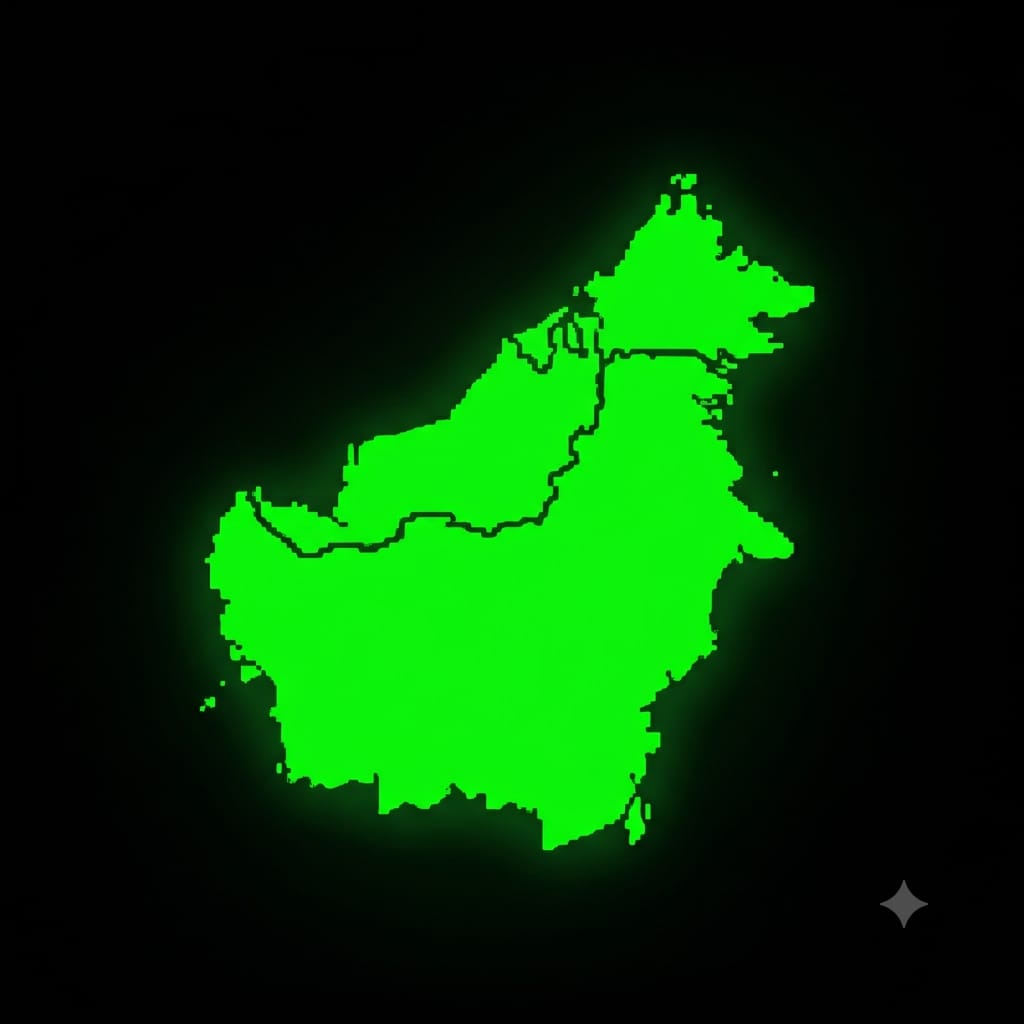
Borneo, Sumatra, Peninsular Malaysia, Philippines (introduced)
Litter size
1–4 young, up to twice yearly
Gestation period
About 70–75 days
Size
Medium-large (head-body 585–950mm)
Weight
3–5kg
A large, robust, dog-like civet with small dark spots arranged in rows on a grey coat, and a tail that is black on top but ringed underneath — the closest look-alike among Borneo's civets is the common palm civet, which has a white facial mask this species lacks, and a plain (not ringed) tail. One of the most regularly recorded civets on Sabah night drives, at both forest and plantation-edge sites, and one of the most terrestrial — it forages almost entirely on the ground, unlike the mostly arboreal palm civets.
Solitary and nocturnal, foraging on the ground for fruit, carrion and small prey. Scent-marks territory using well-developed perineal glands, historically the source of civet musk used in perfumery. Least Concern (IUCN, assessed 2015).