/cc-sarawak-langur.jpg)
/ms-bornean-banded-langur-1.jpg)
/presbytis-chrysomelas-1_commons.jpg)
/1stop-jason-teo-bornean-banded-langur-black-morph.jpg)
/1stop-sarawak-forestry-bornean-banded-langur-camera-trap.jpg)
Presbytis chrysomelas
Basic stats
Diet
Seeds and fruit of specific forest trees (notably Elateriospermum tapos and Hydnocarpus anthelminthicus)
Habitat
Swamp, lowland dipterocarp, coastal and mangrove forest
Range
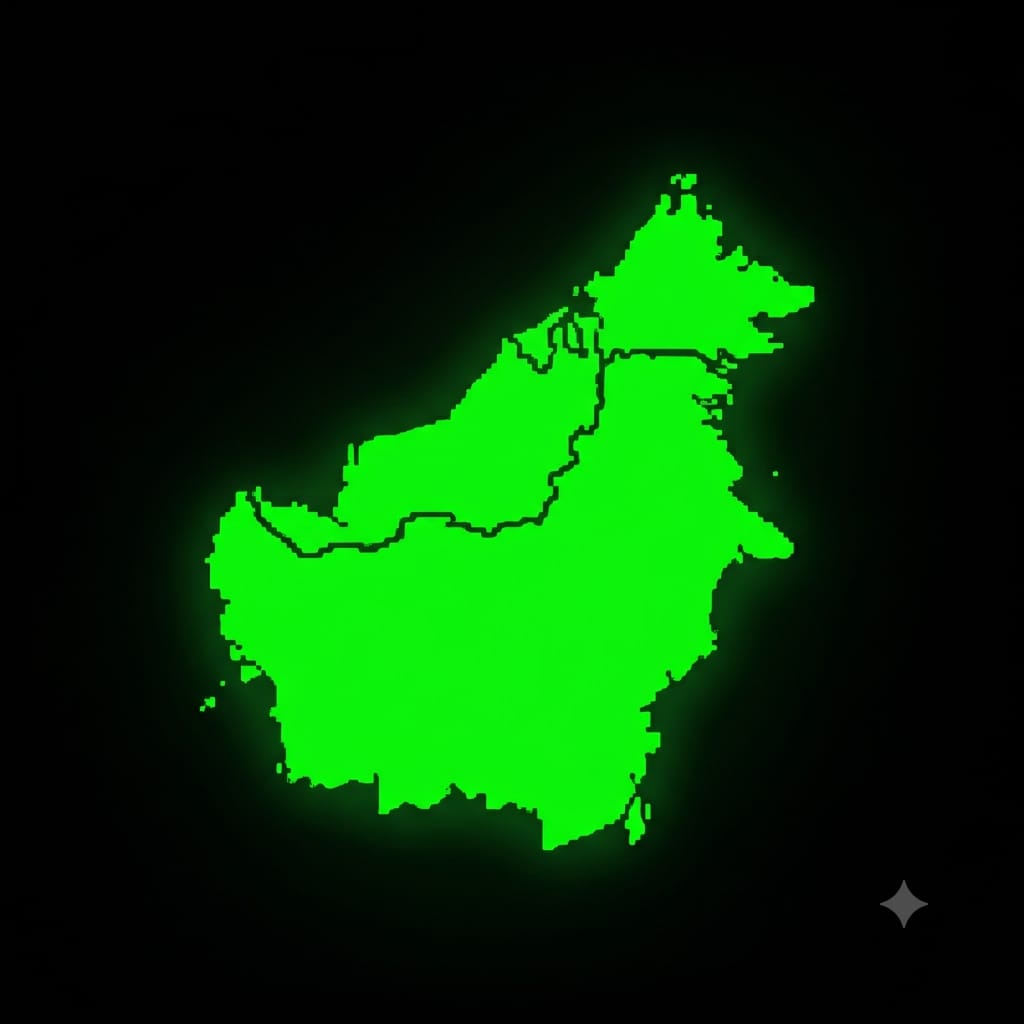
North-western Borneo, north of the Kapuas River (Sarawak, Brunei border areas, West Kalimantan)
Litter size
1
Gestation period
About 5.5–6 months (typical for Presbytis langurs)
Size
Medium
Weight
Not established in the literature
Also known as the Bornean banded langur, this is the most taxonomically tangled of Borneo's leaf monkeys: two colour forms are described, a black morph (jet-black body with a pale chin, wrists and tail underside) and an eastern 'tricolour' form (red-orange head, shoulders, sides, thighs and calves with white cheeks and underside, and black arms, hands, feet and dorsal stripe). Both have bald, grey-skinned, gaunt-looking faces. Mixed troops containing both colour forms have been reported, and researchers genuinely disagree about whether these are true subspecies or simply colour morphs of one variable population — present that as an open question, not a settled fact.
One of the rarest primates on Earth: a 2015 survey found it at only five confirmed sites in Sarawak (Samunsam Wildlife Sanctuary, Tanjung Datu, Gunung Pueh, Similajau and Maludam National Parks), with a combined population estimated at just 200–500 individuals across roughly 5% of its historic range. Critically Endangered (IUCN, assessed 2020), driven by oil-palm conversion.