/rn-sunda-clouded-leopard-1.jpg)
/clouded%20leopard%20close%20up.jpg)
/clouded_leopard_female.jpg)
/cloudedleop.jpg)
/cloudie9.jpg)
/comelnya.jpg)
/DSC_3765_Moment(3).jpg)
/DSC_3765_Moment.jpg)
/lawa%20meow.jpg)
/u_clouded_leopard_close_up.jpg)
/jh-sunda-clouded-leopard.jpg)
Neofelis diardi
Basic stats
Diet
Bearded pigs, deer, primates, smaller mammals
Habitat
Primary and logged lowland/hill forest
Range
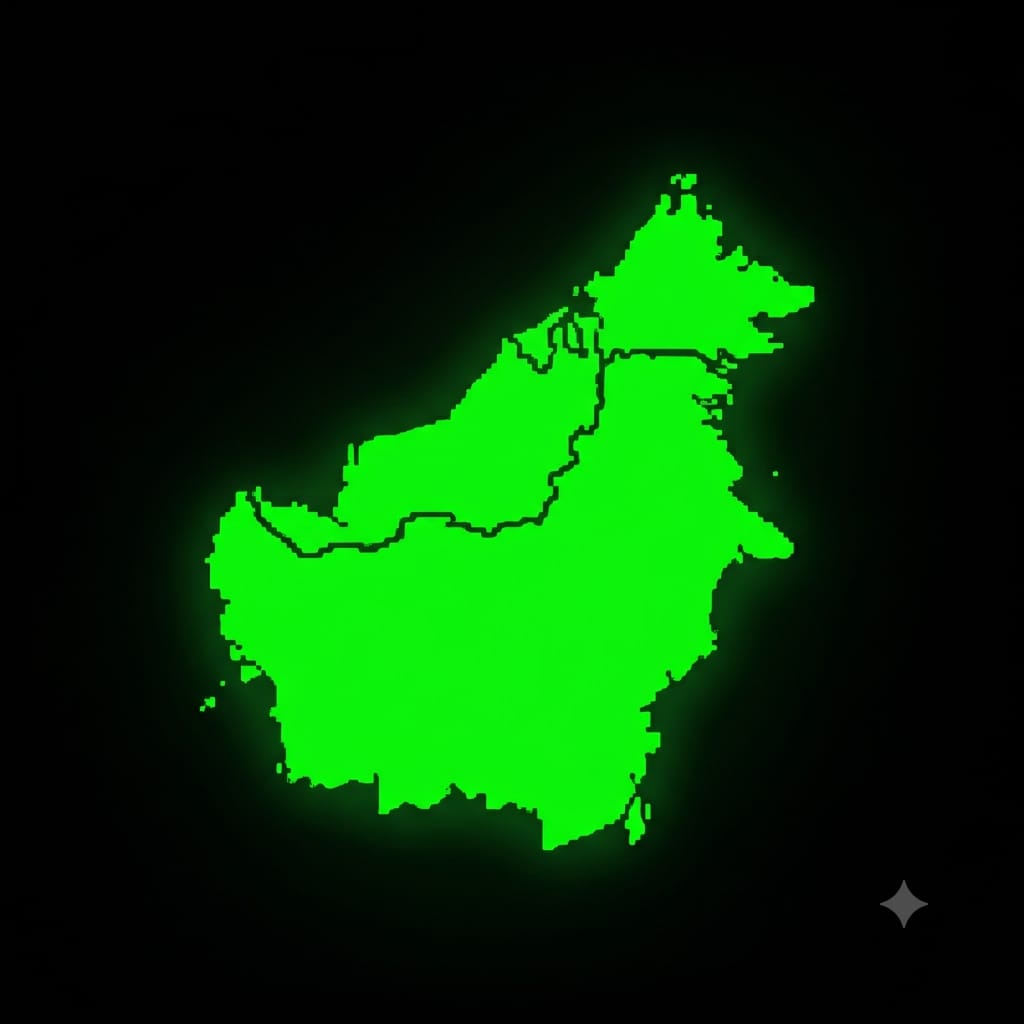
Endemic to Borneo and Sumatra
Litter size
1–2 cubs
Gestation period
About 3 months (85–95 days)
Size
Large cat (head-body: females ~70–105cm; males 86–107cm)
Weight
Females 9–12kg; males 21–26kg
Borneo's apex predator and one of the most sought-after sightings on the island. Named for the large, irregular cloud-shaped markings on its coat, it has the longest canine teeth relative to skull size of any living cat. Confirmed as a species distinct from the mainland clouded leopard only in 2006, based on genetic and coat-pattern differences.
Largely solitary; predominantly nocturnal, with the large majority of sightings falling at night, mostly between around 6pm and 1am, though daytime records aren't unheard of. A felid-wide camera-trap and telemetry study across Borneo found the Sunda clouded leopard and leopard cat to be predominantly nocturnal-to-cathemeral, in contrast to the mostly diurnal marbled cat and bay cat (Hearn, Cushman, Ross, Goossens, Hunter & Macdonald 2018); camera-trap data separately show activity peaking around dawn in both sexes, plus an additional dusk peak in females (Hearn et al. 2026). It hunts using stealth and ambush: ground-dwelling prey such as bearded pigs and deer are stalked and pounced on at ground level, while primates — grey leaf monkeys and proboscis monkeys among them, including targeted takes of infants and juvenile females — are ambushed from the canopy, where the cat's exceptional climbing ability comes into its own (IUCN Cat Specialist Group; Animal Diversity Web). It is exceptionally elusive by day. Deramakot Forest Reserve has the best documented sighting record anywhere in its range, thanks to sustained night-drive effort along quiet logging roads.
The first GPS-telemetry study of the species, in the Lower Kinabatangan floodplain, found two adult males holding largely separate home ranges of about 41km² each, while a tracked female held a much smaller range of around 7km² that overlapped extensively with one male's. Movement was cathemeral, made up of short travel bouts and long stationary spells concentrated in forest; males covered up to 13km in a day and moved faster through oil palm and along roads than inside forest itself (about 1.5km/h in oil palm versus 0.4–0.5km/h in forest). A single forested ridgeline — accounting for over half of all camera-trap detections across the roughly 2,000km² study area — functioned as a shared communication site, repeatedly visited by multiple individuals and carrying most recorded scent-marking (Hearn et al. 2026).
Morphological ranges above are drawn from wild-cat researcher A.J. Hearn's own primary capture records and occasional roadkill specimens, updated from earlier published estimates: tail length runs roughly 70–77cm in females and 78–85cm in males, and females are markedly smaller-bodied than males across every measurement. Wild longevity of at least 6.5 years has been documented; captive longevity is unrecorded.
Vulnerable (IUCN, assessed 2015), threatened by deforestation and snaring across its range.