%20(Ichthyophis%20sp.)/jl-caecilian-1.jpg)
%20(Ichthyophis%20sp.)/jl-caecilian-2.jpg)
Ichthyophis sp.
Basic stats
Diet
Earthworms and soil invertebrates
Habitat
Damp soil and leaf litter, usually near forest streams
Range
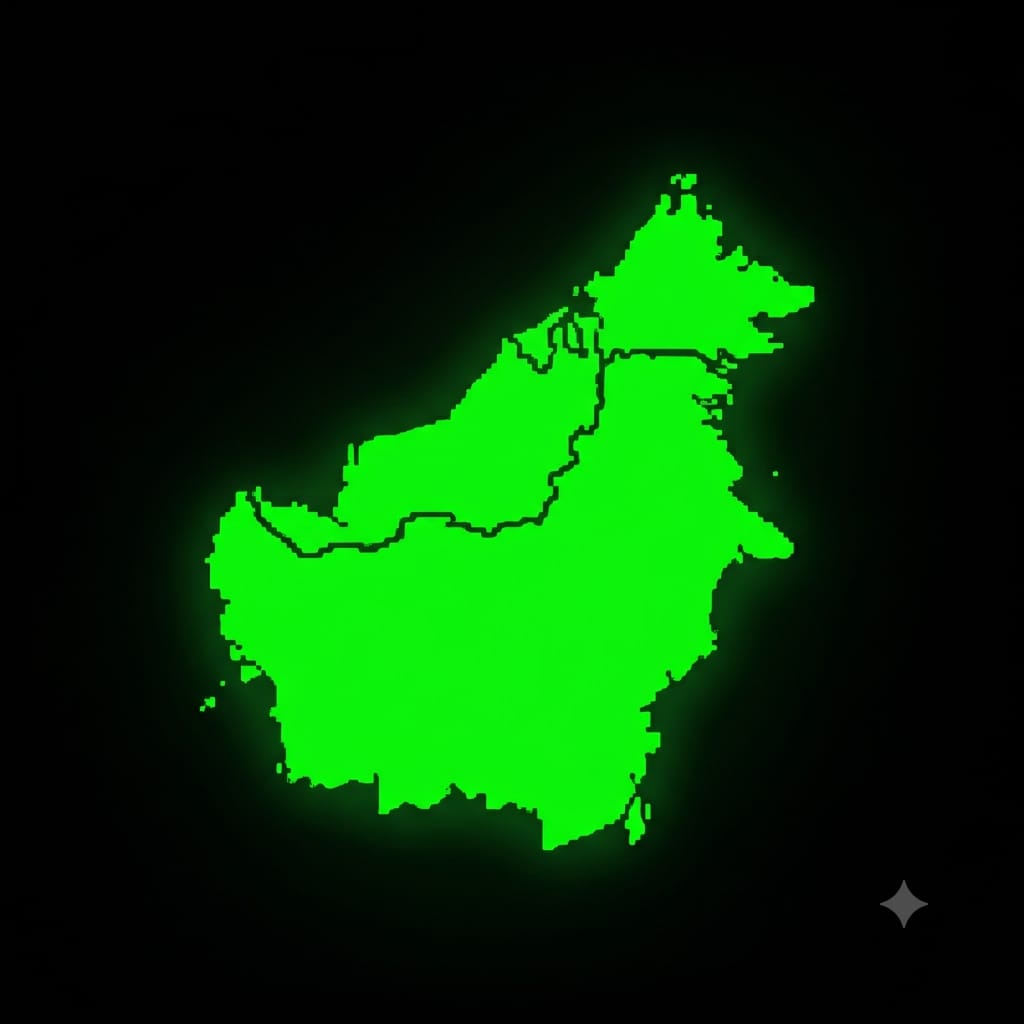
Borneo-wide, but rarely recorded
Clutch size
20–58 eggs
Incubation period
About 70–80 days, female coiled around the clutch
Size
Roughly 20–40cm long, about as thick as a pencil
Weight
Not well documented
A legless, burrowing amphibian — not a snake and not a worm, though it is almost always mistaken for one or the other. Caecilians are the third branch of the amphibians, alongside the frogs and the salamanders, and Borneo's belong to the genus Ichthyophis. They spend their lives underground in damp soil and are seen mainly when heavy rain floods them out, when a drain or a garden bed is dug over, or crossing a wet path at night.
Telling one from a snake is straightforward once you know what to look for. A caecilian has no scales — the body is smooth, moist and glandular, ringed by dozens of closely spaced grooves, or annuli, that make it look segmented like an earthworm. It has no eyelids and the eyes are tiny, sometimes covered by skin or bone, so there is no obvious eye. Between the eye and the nostril sits a short retractable tentacle, a chemical sense organ found in no other animal, which is the single most diagnostic feature at close range. Asian caecilians do have a short blunt tail, but nothing like a snake's tapering one.
Telling one from an earthworm is easier still: a caecilian is far larger, has a distinct head with a mouth and jaws, and moves with a firm muscular push rather than the stretch-and-contract of a worm. Colouring is usually dark slate to purplish-brown, and many species carry a pale yellow stripe down each flank, though Borneo's Ichthyophis monochrous is plain — its name means "one-coloured".
Breeding ties them to water even though the adults are terrestrial. The female lays a string of eggs in a burrow near a stream and stays coiled around the clutch until they hatch, keeping them damp and guarded. The hatchlings are aquatic larvae with three pairs of feathery external gills and a finned tail; they wriggle to the stream, feed there, then metamorphose and take up the burrowing life underground.
They are harmless — no venom, and no inclination to bite. If you find one, the useful thing is to photograph the head and count nothing: identification to species needs annuli counts and locality data, and even specialists often leave Bornean records at Ichthyophis sp. A photograph with a location and date is a genuinely valuable record, because these are among the least-known animals on the island.