/ct-northern-grey-gibbon-tabin.jpg)
/cc-northern-grey-gibbon.jpg)
/hylobates-funereus-2_commons.jpg)
Hylobates funereus
Basic stats
Diet
Fruit (especially figs), leaves, insects
Habitat
Primary and tall secondary lowland/hill forest
Range
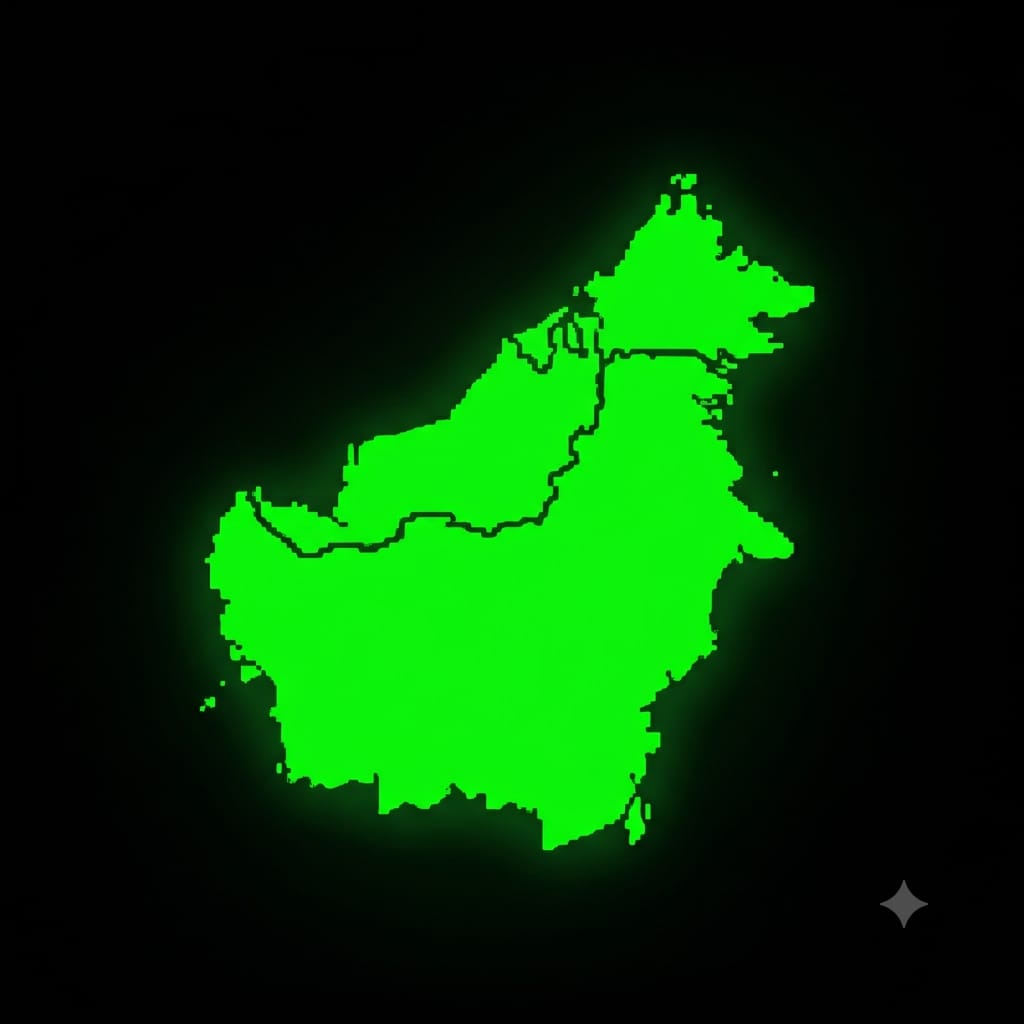
Sabah, Brunei, and northern/eastern Kalimantan, south to the Mahakam River and west to the Baram River
Litter size
1 (genus-typical figure)
Gestation period
About 7 months (genus-typical figure)
Size
Small, tailless ape (head-body 44–64cm)
Weight
4–8kg (genus-typical figure)
The gibbon actually heard and seen across Sabah's forests, including Danum Valley, Imbak Canyon and Tawau Hills — despite the similar-sounding 'Bornean gibbon' being the more widely used generic name for the group, that name (Hylobates muelleri) properly belongs to a different, more southerly species under current taxonomy. This one is darker and more contrastingly marked: a blackish-brown cap, underparts and inner limbs set off by a broad white brow and pale cheek patches, with hands distinctly darker than the limbs — the clearest field mark against the Bornean gibbon, whose hands are the same colour as its limbs or lighter.
Occurs from Sabah and Brunei across northern and eastern Kalimantan, bounded to the south by the Mahakam River and to the west by the Baram River in Sarawak; it hybridises with both the Bornean gibbon and Abbott's grey gibbon in narrow contact zones. Best located by ear at first light, then tracked visually as the loud, rising dawn duet calls settle — pairs are monogamous and defend a fixed territory, moving by hand-over-hand brachiation through the canopy.
Endangered (IUCN, assessed 2020), with population declines of more than 50% over roughly 30 years driven by oil-palm and timber-related habitat loss.