/1stop-chien-lee-abbotts-grey-gibbon.jpg)
Hylobates abbotti
Basic stats
Diet
Fruit, young leaves, flowers, insects (inferred; not yet studied in the wild)
Habitat
Primary and tall secondary lowland/hill forest
Range
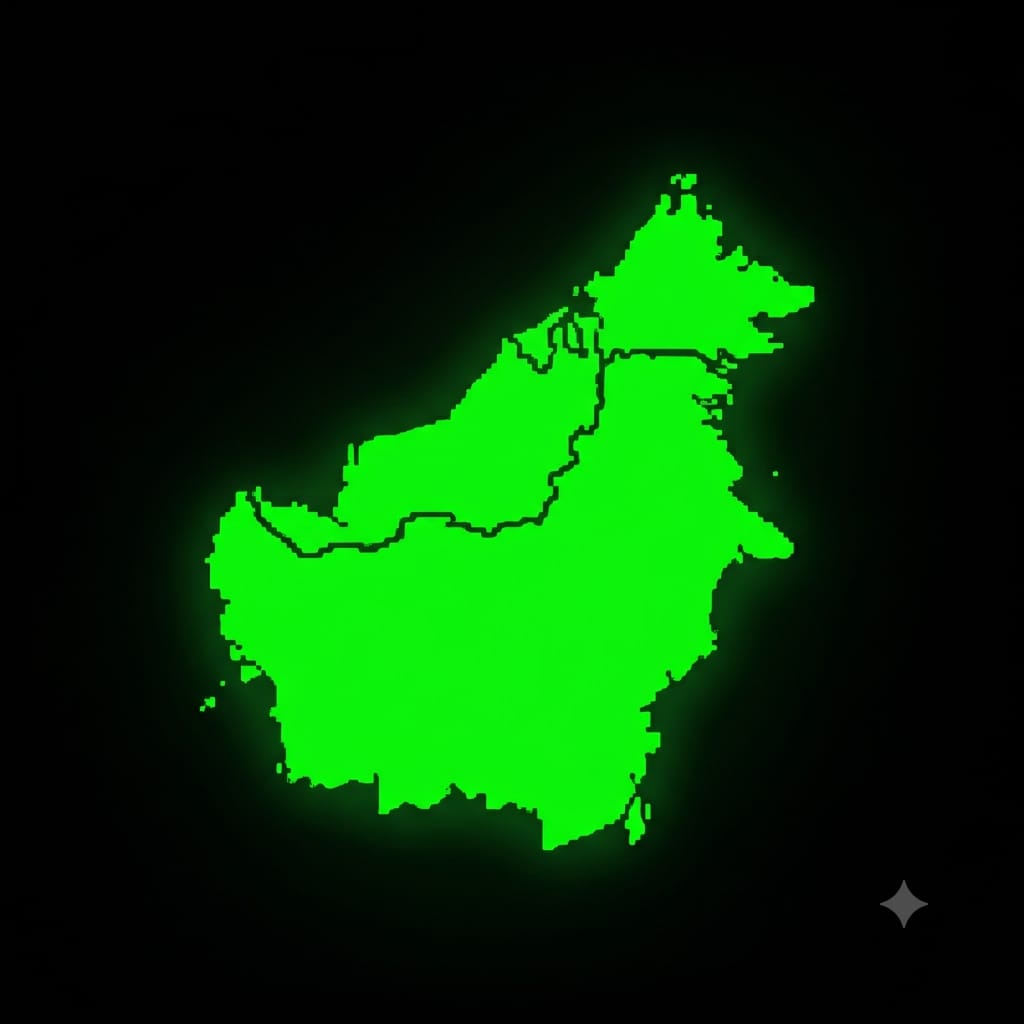
West Kalimantan and southern Sarawak, north of the Kapuas River
Litter size
1 (genus-typical figure)
Gestation period
About 7 months (genus-typical figure)
Size
Small, tailless ape
Weight
Males 5.9–6.4kg; females 5.5–6kg
One of four Hylobates gibbon species that geographically replace one another across Borneo, each holding a river-bounded range with only narrow contact zones between them. Medium-to-mouse-grey overall, often duller than a silvered langur's coat, and — unlike the Bornean and northern grey gibbons — frequently lacking a clear dark cap on the crown, though this is not a fully consistent mark. Populations near its contact zone with the northern grey gibbon sometimes show darker throat, finger and toe hair, suggesting local hybridisation.
Restricted to West Kalimantan and southern Sarawak, north of the Kapuas River, in forest reserves such as Betung-Kerihun and Danau Sentarum (Kalimantan) and Batang Ai and Lanjak Entimau (Sarawak). Ecology is assumed to mirror the other Bornean grey gibbons — monogamous pairs defending territory with dawn duet calls, moving by hand-over-hand brachiation — but this species has not itself been the subject of a dedicated field study, so diet and behaviour here are inferred rather than directly observed.
Endangered (IUCN, assessed 2020 under criterion A4cd), with a suspected population decline of 50% or more over three generations from habitat loss and hunting.