Diplogale hosei
Basic stats
Diet
Small fish, shrimp, crabs, frogs, insects — the one captive individual on record refused fruit
Habitat
Lower montane and mature mixed dipterocarp forest, especially humid, mossy terrain near streams, from about 325m upward
Range
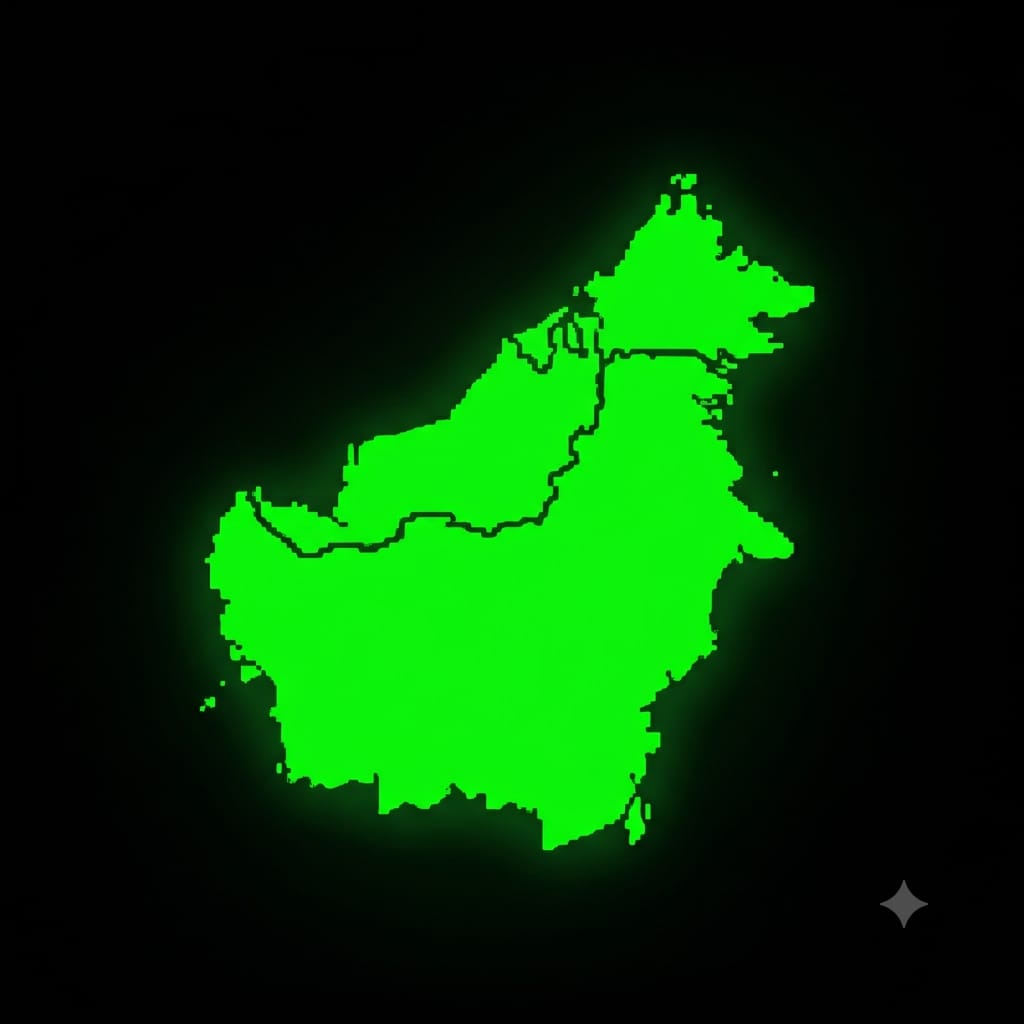
Endemic to Borneo (Sarawak, Sabah, Kalimantan interior, Brunei)
Litter size
Not documented
Gestation period
Not documented
Size
Small-medium (head-body 472–540mm, tail 298–346mm)
Weight
Estimated 1.4–1.5kg
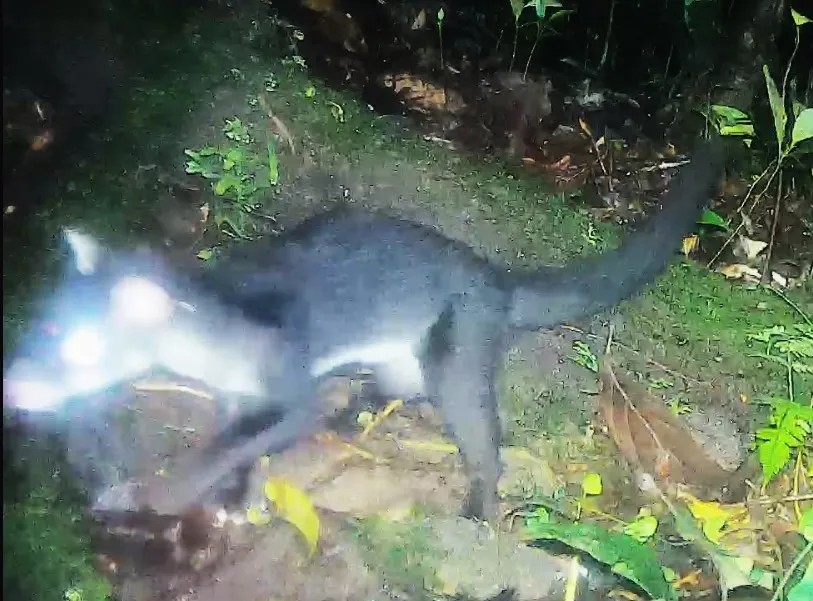
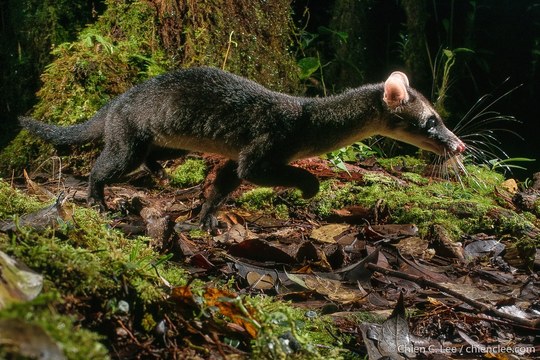
One of the least-documented carnivores in the world: dark brown-to-blackish upperparts and white-to-brownish-white underparts, with dark rings around the eyes, very long white facial whiskers and a flesh-coloured snout with protruding nostrils. Its plain, unringed tail separates it from the ringed-tailed Malay civet, and its muzzle shape and lack of bold banding separate it from the superficially similar banded civet.
Historical knowledge came almost entirely from around 17 museum specimens; the first living individual wasn't examined until 1997, and modern records come almost exclusively from camera traps (including Upper Baram, Sarawak in 2012, and Maliau Basin, Sabah). Gestation, litter size and precise population size are not established in the literature — this should be stated as unknown rather than filled in. Vulnerable (IUCN, assessed 2015); any confirmed sighting or clear photograph is a genuinely significant record.